
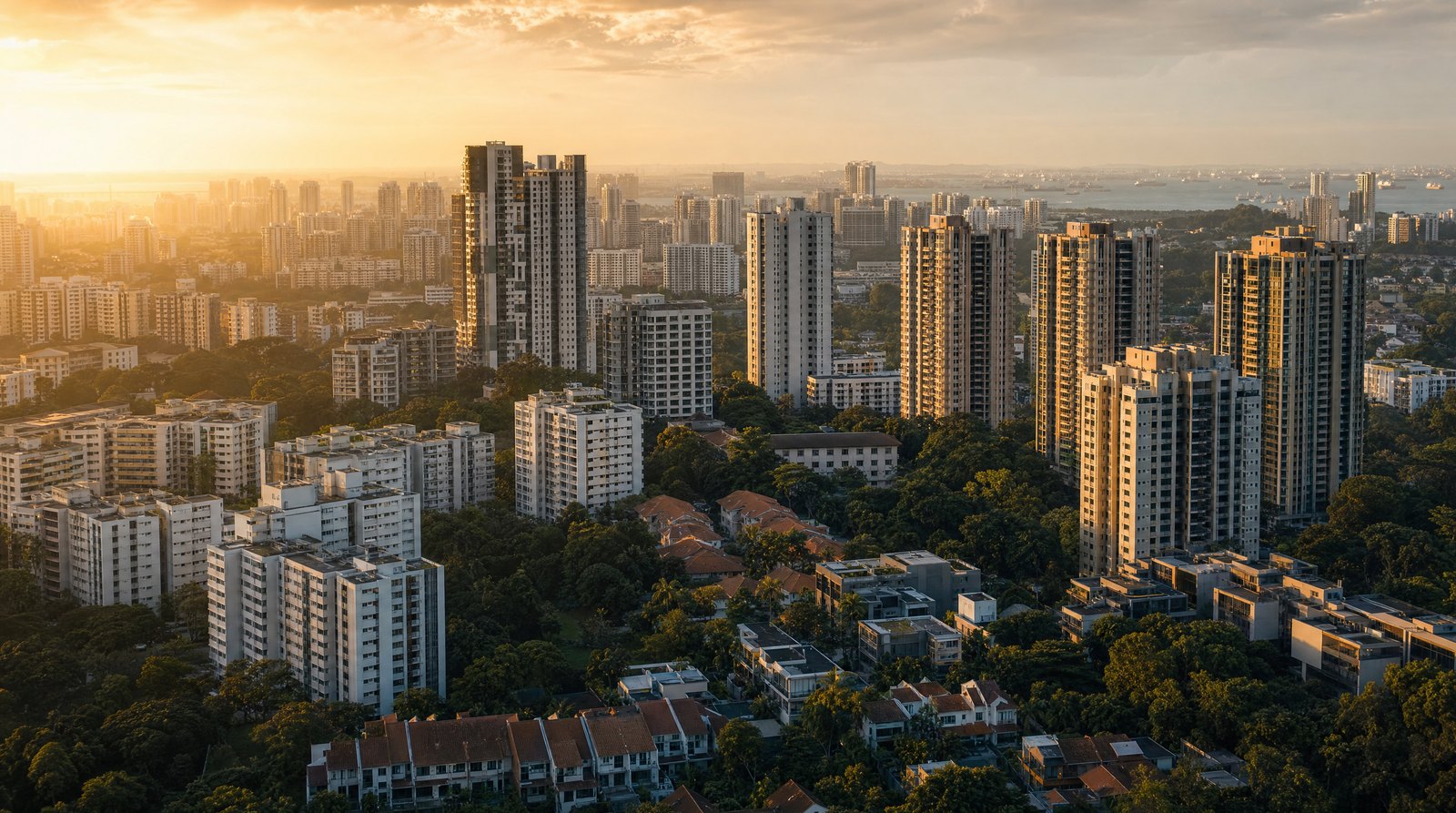
The entire industry sells one word: location. It is the most repeated idea in Singapore property, and the least examined. A good address gets you into the room. On its own, it has never once gotten anyone out at a profit.
The uncomfortable part of the 2025–26 numbers
Read the headline and the market looks calm. URA’s overall private residential price index rose 0.9% in Q1 2026, in line with the 0.8% average quarterly pace of 2025. Look underneath it and the story inverts the cliché.
For the whole of 2025, non-landed prices in the Core Central Region, the “best” addresses, rose 1.9%. The Rest of Central rose 1.6%. The Outside Central Region, the suburbs, rose 3.2%. The prime districts did not deliver the best capital gains; the mass market did. And in Q1 2026, even as prices ticked up, transaction volume fell 39.7% quarter-on-quarter. A rising index and an easy exit are not the same thing.
The project level is starker still, and I see it constantly in the URA caveats. Take a sought-after, city-fringe project where the launch price already sat near the top of its range. A three-bedder bought there can change hands six years later barely above what it cost, a good address that earned almost nothing, because the entry price had already pre-spent the upside.
It is not a one-off. Run the same suburban region through our own analysis and the weakest projects, the ones with enough resales to read, have gained only a fraction of what the region averaged over the same hold. Same region, same window, a spread of twenty points or more. The address was never the variable that separated them.
A good area raises your floor. It does not, on its own, raise your ceiling, because everyone can see a good area and the market has already priced it in.
What actually moves an exit
When a good-location purchase disappoints, the cause is almost always one of five things, and none of them is the address.
- Exit liquidity. A project that trades a handful of units a year has no price discovery. When you sell, valuers struggle to support a number and your buyer pool is thin. Prestige is worthless if nobody is transacting around you.
- Unit mix and size. One-bedders and shoebox units have historically lagged larger units on capital appreciation; today larger formats in the same development can trade at a premium of around 10%. The right unit inside a good project matters more than the right district.
- Lease position. On the Bala curve, market uplift outruns lease decay for roughly the first 15–30 years, then decay begins to bite. Buy late in that window and you inherit the back half of the curve.
- Entry price versus the district’s own ceiling. You can buy a great area at a bad price. Pay above what comparable units have actually transacted at, or above the district’s quantum ceiling, and you have pre-spent your own upside.
- Supply pipeline. A new launch next door resets the reference price for the entire street. Where the forward pipeline is heavy, resale gets capped no matter how good the location reads on a map.
Why “good area” is a trap, not a thesis
Location is necessary, but it was never sufficient. A good area compresses your downside; it is genuinely harder to lose money in one. It does not manufacture upside, because it is the one variable every other buyer is already looking at. The edge is the project-level read inside the area: which specific developments, stacks and unit types have a safe, liquid exit, and which only look the part.
How we read it
This is the exact gap BuySafe was built to close. A headline appreciation figure can be shaped by which units happened to sell, since larger or higher-floor units transacting recently quietly lift the average. BuySafe estimates the like-for-like picture instead, using a hedonic regression to adjust price growth for size, floor and time across 140,000+ publicly available URA transactions and 3,000+ private condo projects.
Every project then carries a single comparable BuySafe Score from 0 to 100, weighing the factors that actually decide whether a buy holds up — real, like-for-like appreciation, how easily you could exit, pricing against the market, and recent momentum and consistency. Where the data is too thin to model reliably, it shows nothing rather than a number you couldn’t lean on. So rather than argue about whether an area is “good”, we can tell you, plainly, which good-area projects have a safe exit and which are priced on reputation alone.
How we find the strongest performer in your area →
Want this read on your own shortlist?
Keep reading
Related notes.

Six quarters of muted growth: is this the upgrader’s window, or a trap?
Private prices have grown at 1% or less for six straight quarters, and HDB resale has now fallen two quarters in a row. That combination is unusual, and it changes the arithmetic of upgrading in a way most sellers have not noticed yet.
The three forces that decide whether waiting pays: capital, rates and replacement cost.
Most buyers are waiting for one number to fall: the price. But three forces sit underneath every price in this market, and right now all three point the same way. Here is the framework, the data behind each force, and the honest case for waiting anyway.
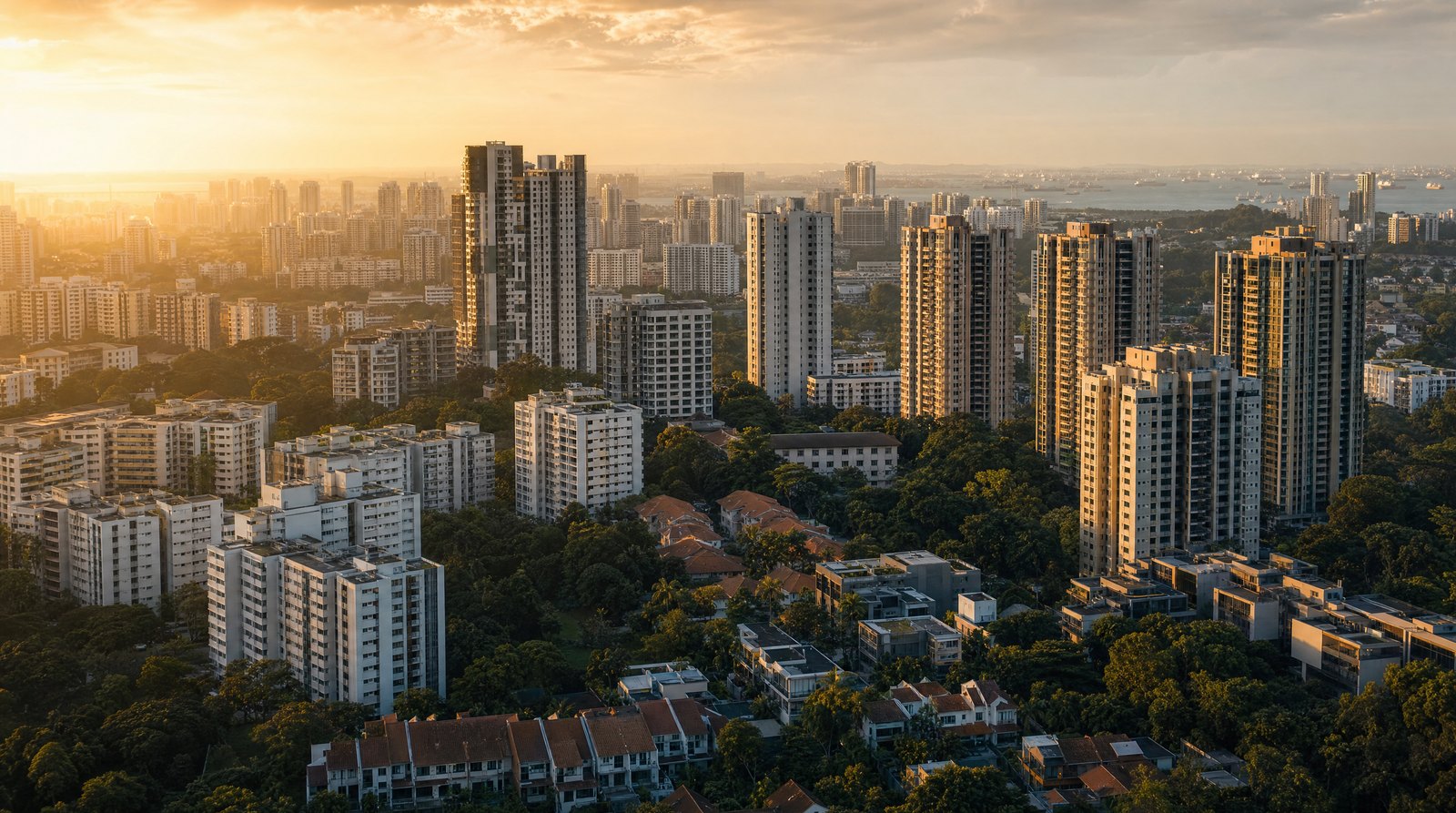
Singapore condo market trends that matter.
The market isn’t simply up or down, it’s repricing by segment, district and buyer. The trends that decide whether your condo holds its value, and exits cleanly.
Not financial advice. This is general commentary for informational purposes only. It is not financial, investment, legal or tax advice, and not a recommendation to buy, sell or hold any property. Past performance is not indicative of future results.
Estimates, not guarantees. BuySafe scores and appreciation figures are model-based estimates and may contain errors or omissions. Always conduct your own due diligence.
Independent. The Property Collective is not affiliated with, endorsed by, or connected to the Urban Redevelopment Authority (URA) or any government agency. Transaction data is sourced from publicly available URA records.