
Somewhere in most property pitches sits a round, comforting number: a 4% rental yield. It is worth knowing that a private condo in Singapore has not reliably paid that in years. The figure survives because it sells. The actual numbers are colder, and if rental income is part of why you are buying, they deserve a proper look.
The real number
Gross rental yields on Singapore private homes have been sitting around 3%, give or take. The prime districts, the ones people assume are the strongest investments, actually run lower, while suburban condos quietly yield a little more. And that is gross, before a single cost comes out.
Then the costs come out
Gross yield is the brochure figure. What you keep is net. Out of the rent come maintenance and sinking-fund contributions, property tax, the occasional commission to find a tenant, minor repairs, and the weeks a unit sits empty between leases. Net it all off and a headline 3% commonly lands closer to 2–2.5%. The 4% you were quoted was never the number that reaches your account.
Financing is the other half. Fixed home-loan rates in 2026 have eased to roughly 1.5–2%, down from a peak near 4.5% in late 2022. So at today’s rates the rent more than covers the mortgage, a positive carry. That is genuinely better than the 2022–23 stretch, when borrowing cost more than the unit yielded. It can also flip again if rates climb, which is the whole point: the yield is thin enough that the margin between earning and bleeding is small.
Rental yield is how you hold a property. It has almost never been the reason a Singapore property made anyone wealthy.
Why yield was never the engine
Singapore residential returns have been driven by capital appreciation and a clean exit, not by the rent cheque. Yield keeps the holding affordable while the asset does the real work. Buy a unit purely because someone quoted a high yield and you can end up overpaying for a small, hard-to-resell shoebox whose “yield” came from a low price for a reason. The rent supports the hold. It does not make the case.
- Chasing the shoebox. The highest gross yields often sit on the smallest units, which can be the hardest to resell well.
- Misreading prime. Expensive districts can carry the lowest yields, so “premium” and “high income” are not the same buy.
- Ignoring the exit. A strong-looking yield means little if you cannot sell the unit at a fair price when you need to.
What we actually weigh
When we read a project, appreciation and exit liquidity carry most of the weight, and yield supports rather than leads. Our BuySafe engine scores size-adjusted price growth and how easily a project trades, so a buy stands on whether it grows and exits cleanly, with the rent as a cushion rather than the headline.
Why the headline number can mislead →
If the rent cheque is doing the work in your plan, it is worth a second pair of eyes on the real numbers.
Keep reading
Related notes.
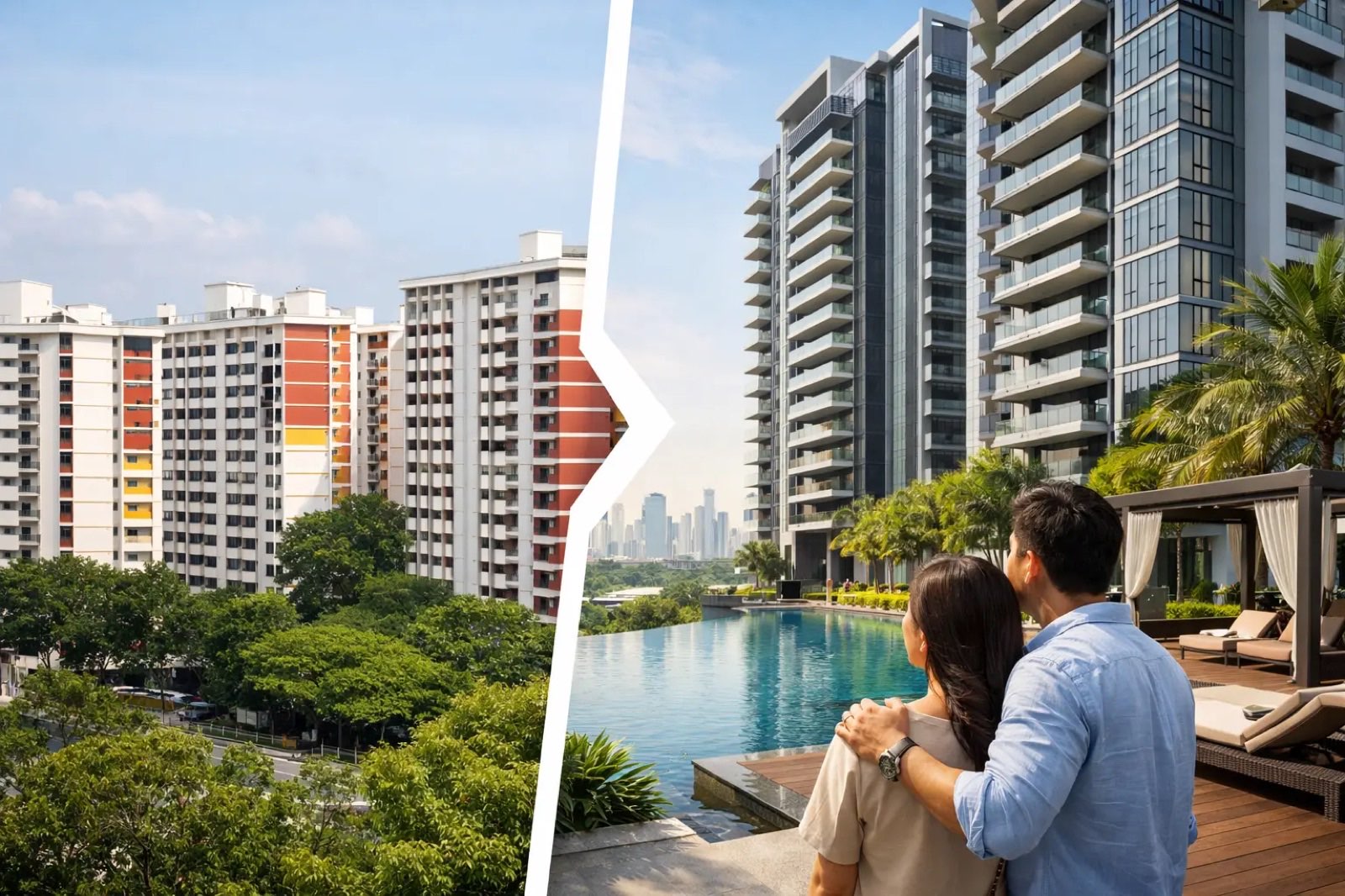
Six quarters of muted growth: is this the upgrader’s window, or a trap?
Private prices have grown at 1% or less for six straight quarters, and HDB resale has now fallen two quarters in a row. That combination is unusual, and it changes the arithmetic of upgrading in a way most sellers have not noticed yet.
The three forces that decide whether waiting pays: capital, rates and replacement cost.
Most buyers are waiting for one number to fall: the price. But three forces sit underneath every price in this market, and right now all three point the same way. Here is the framework, the data behind each force, and the honest case for waiting anyway.
Singapore condo market trends that matter.
The market isn’t simply up or down, it’s repricing by segment, district and buyer. The trends that decide whether your condo holds its value, and exits cleanly.
Not financial advice. This is general information for informational purposes only. It is not financial, investment, legal or tax advice, and not a recommendation to buy, sell or hold any property. Past performance is not indicative of future results.
Estimates, not guarantees. Yield and rate figures are drawn from public sources as cited, vary by unit and lease, and change over time. Always conduct your own due diligence.
Independent. The Property Collective is not affiliated with, endorsed by, or connected to any government agency. Data is sourced from publicly available records.