A property budget can look comfortable on paper and still fall over at the bank. The gap is rarely the downpayment — it’s borrowing capacity, and in Singapore two rules decide it: the Total Debt Servicing Ratio (TDSR) and the Mortgage Servicing Ratio (MSR). The honest answer to “how much can I borrow?” isn’t a single number. It’s a range set by your income, your existing debts, the loan structure, and how much room you want to keep for the move after this one.
That last part matters. A bank may approve a loan that’s technically possible while a disciplined buyer deliberately borrows less — to hold cash, keep upgrade capacity, and stay comfortable if rates stay elevated. Financing isn’t just a hurdle before the purchase. It’s part of the asset strategy.
TDSR and MSR: the two guardrails
In plain terms: TDSR asks whether your whole balance sheet can carry the loan; MSR asks whether the home loan alone is proportionate to your income, for public housing and new ECs. Where both apply, the lower figure wins. Neither is a target — they’re regulatory ceilings, not an instruction to borrow to the max.
How the bank actually works out your number
It starts with gross monthly income — fixed salary plus eligible variable pay, with a haircut on less predictable income (commission, self-employed, bonuses). Then it subtracts your existing monthly obligations: car loans, personal and education loans, credit-card commitments, and repayments on any other property. A strong household income can still fall short of the expected loan because one existing commitment is quietly eating the ratio.
Crucially, the bank doesn’t assess your repayment at the promotional rate in the loan package. It uses a stress-test rate — for residential property, a regulatory floor of 4% (or the actual rate, if higher). That’s why a repayment that feels manageable at today’s rate produces a smaller approved loan. Tenure matters too: a longer tenure lowers the monthly instalment and can lift the loan TDSR supports, but the loan-to-value limit drops if the tenure runs past 30 years, or if tenure plus your age exceeds 65 — and a longer loan means more interest and slower equity.
A worked example: what $16,000 of income supports
Why the maximum loan is rarely the right budget
A bank-approved maximum is a credit decision; your purchase budget is a portfolio decision. Borrow to the ceiling and you leave little room if rates rise, a bonus disappoints, a child starts school, or you want to hold your current home until the next purchase is secured. It can also drain nearly all your CPF and cash into the entry — leaving nothing for renovation, a vacancy, or repairs.
For upgraders it’s more layered: sell first or buy first, whether you can carry two properties through the transition, how the existing loan drags your TDSR before the sale completes, and the ABSD cash you front if you buy before selling. Timing has a direct financial cost — a well-sequenced move preserves borrowing power; a rushed one burns it.
TDSR is only one guardrail — LTV and the capital stack
Even where TDSR supports a big loan, the loan-to-value limit can cap it. A first housing loan from a bank goes up to 75% of the price or valuation, whichever is lower (subject to tenure and age); a second or subsequent loan is lower. So the real question is the whole capital stack: cash, CPF available for housing, sale proceeds and CPF refunds with accrued interest from your current home, the maximum supportable loan, Buyer’s Stamp Duty, and any ABSD. The price is only one line in that sum.
CPF needs care. Using more Ordinary Account today lifts your entry capacity, but it comes back — with accrued interest — when you sell, trimming your next deposit. That doesn’t make CPF wrong; it means weighing it against your holding period, your next upgrade, and retirement adequacy.
Get your financing clarity before you view
Before you narrow projects or districts, build a lender-ready picture: confirm each borrower’s documented income, list every debt, and get an In-Principle Approval. If you’ll sell an existing home, model both the sell-first and buy-first paths rather than assuming a clean handover. It’s also worth testing the purchase below the ceiling — qualifying for a $7,000 assessed instalment but choosing $5,500 isn’t wasted capacity, it’s optionality.
Then, and only then, choose the project — because a bigger loan widens the shortlist but doesn’t make every project defensible. Entry price, supply, unit liquidity and exit demand still decide whether a home holds its value. That’s the read we bring with BuySafe, so financing clarity and asset quality line up. Know the exit before you enter.
Next: plan the loan before you fall for the house →
Sources
Your borrowing limit shapes every other move. We model your real capacity (TDSR, MSR, CPF and cash) before you shortlist a single project.
Keep reading
Related notes.
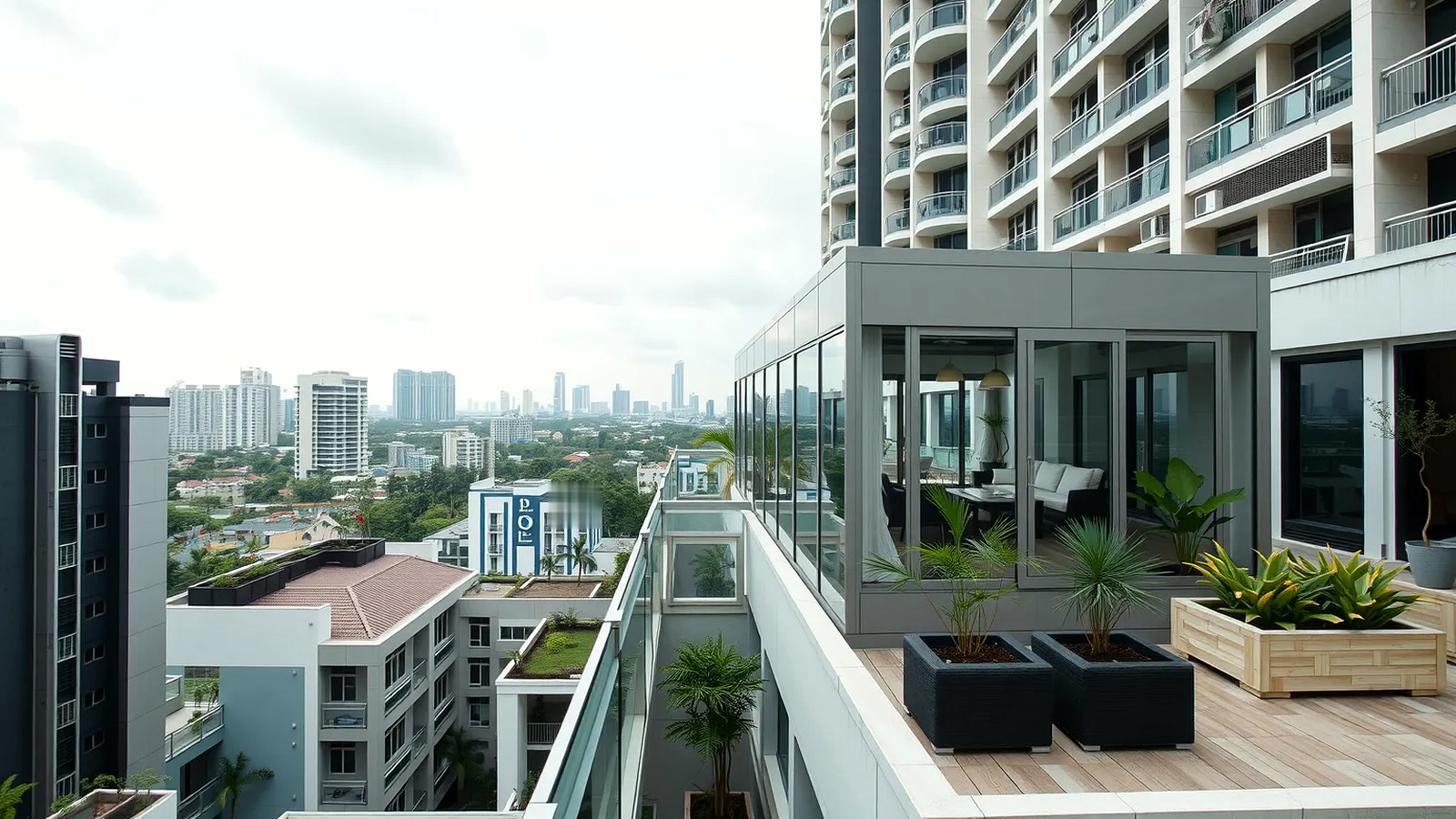
Unauthorised works in condos: the $200,000 problem you can inherit, and how to check before you buy.
URA says reports of unauthorised works in strata homes have run at about 150 a year since 2024, nine in ten are confirmed, and the owner on title is responsible for fixing them even if the loft or the enclosed roof terrace came with the unit. Fines reach $200,000 under two Acts. Here is what counts as unauthorised, what it costs, how a buyer checks a unit for $91.50 in searches, and what an owner does about works already in place.
Inherited a property in Singapore? Here is the process, the tax you don’t owe, and the one you quietly do.
What to do if you inherit a property in Singapore: no estate duty, no stamp duty on the inheritance itself and no CPF refund on the deceased’s savings, but HDB runs a 6-month and a 12-month clock after probate, a landed home cannot pass to a foreign heir without approval, and the property joins your ABSD count on whatever you buy next.
Divorce and your property in Singapore: what actually happens to the flat, the CPF, and the next purchase.
A divorce court order can move the matrimonial home to one spouse without any stamp duty. But the CPF refund is a default the Court can vary, a subsidised flat still carries a resale levy, and a replacement home bought before the old one is sold can trigger ABSD anyway. Here is how property, CPF and tax actually work through a Singapore divorce.
Not financial advice. General information about how borrowing limits work in Singapore. It is not financial, investment, mortgage, tax or legal advice, and not a recommendation to borrow any amount or buy, sell or hold property. Your actual limit depends on the lender’s assessment of your circumstances.
Rules change. The TDSR (55%), MSR (30%), the medium-term stress-test rate floor (4% for residential) and LTV limits (75% on a first bank loan) are set by MAS and HDB and can change without notice. Figures are general guidance as at 2026 — confirm your exact position with a bank or mortgage adviser before committing.
Independent. The Property Collective is not affiliated with, endorsed by, or connected to any government agency. BuySafe analyses resale private condos using historical, publicly available URA transaction data and does not cover new launches; past performance is not indicative of future results.