
The upgrade always looks affordable on the brochure. It stops looking affordable the moment the financing is put together badly. That is why property loan planning for upgraders is not really about chasing the lowest interest rate. It is about how much cash you keep, how much breathing room you have afterwards, and how cleanly you can sell again down the road.
Most people start with the dream condo and then squeeze the loan to make it fit. Do it the other way round. Look at your numbers first — what your current place is really worth after the loan is cleared, how much CPF and cash you have, and when you can sell. Once that is clear, the right price range for the next home almost picks itself.
Why upgrading is a different game from your first buy
A first-time buyer is mostly solving one problem: getting in. An upgrader is juggling a handover — selling one home while buying the next, often with money still stuck in the first one.
You probably have equity locked in your current place, CPF already used on it, a loan still to clear, and an income that looks different from when you first bought. If you are moving from an HDB flat to a condo, you are also switching rule books — from HDB financing to a bank loan, and into private-property stamp duties.
So the new purchase is never judged on its own. It sits inside a chain: your sale price, clearing the old loan, refunding CPF where it applies, stamp duties, legal fees, maybe a bridging loan, and the monthly repayment you live with after you move in.
A sharp upgrader does not ask, “What is the most the bank will lend me?” The better question is, “What loan lets me move up without choking the next five years?”
Add up the whole pot of money first
Before you talk to any banker about rates, break the move into where the money actually comes from. Four buckets — and the trouble usually starts in how they interact.
- Your existing equity. Not the price you hope to fetch — that figure, minus the outstanding loan, minus selling costs, minus a buffer in case the sale drags or closes lower than you wanted. Plan on the realistic number, not the coffee-shop estimate.
- CPF. Most people treat CPF as easy money to tap and stop there. But whatever you use is refunded to your account with 2.5% accrued interest when you sell, so it is money you do not actually pocket on the day. Using more eases the cash crunch now; keeping it untouched leaves more flexibility later. A trade, not a freebie.
- Cash. Not glamorous, but it keeps the move from going off the rails — the option fee, the stamp duties, renovation overruns, the overlap if you pay for two places for a while, and the small surprises every move throws up. If the upgrade swallows almost all your cash, the deal works on paper while you walk a tightrope.
- Loan capacity. A big approval letter feels like permission, but servicing a loan and carrying it comfortably are not the same. The bank caps your monthly repayments at 55% of income — the TDSR rule — yet that ceiling is the bank protecting itself, not a target. If your income swings, or you have school fees and parents to support, treat the approval as your maximum, not your plan.
The Singapore rules every upgrader bumps into
The goal is the right loan, not the biggest one
In real cases, the costly financing mistake is rarely picking a lender whose rate is slightly higher. It is taking on the wrong amount of debt.
A bigger loan keeps more cash in your pocket today, which can be smart. It also means more interest, tighter monthly cash flow, and less room to move if rates stay high. A smaller loan feels safe, but if it drains your savings to the last dollar, that is its own kind of risk. Size the loan to how much shock it can take, not to how much the bank will allow.
That usually means leaving room for three things you can already see coming: rates going up, an income hiccup, and the family spending you know is around the corner — a baby, a car, an ageing parent. A dual-income couple in stable jobs can stretch differently from a business owner with lumpy income. A family settling in for the long haul can take a different repayment shape from someone who expects to move again in five years.
When you sell vs when you buy changes everything
In Singapore the order of moves matters as much as the homes themselves. Sell first, buy first, or thread both through a tight window — the same two properties can produce very different outcomes.
- Sell first gives you the clearest picture. You know exactly what you banked, your old loan is cleared, and you size the new purchase with fewer guesses. The price you pay is comfort: renting in between, moving twice, or hunting for the next place under time pressure.
- Buy first keeps life smoother and lets you pick the right home without rushing — but it is where ABSD bites. Buy a second property before selling your current one and you pay Additional Buyer’s Stamp Duty upfront: 20% for a Singapore citizen’s second home. Married couples can claim it back if they sell the first home within six months of the purchase — but you still need that 20% in cash on the table first, and it is a big number. Buy-first suits stronger balance sheets; it gets risky when the old sale is assumed rather than lined up.
Get the order wrong and you back yourself into bad calls later — accepting a low offer on your flat because you suddenly need the cash, or over-paying on the new place because you were counting on proceeds that came in short. The problem is rarely ambition. It is sequencing without enough margin.
Four ways Singaporeans actually upgrade
There is no single “right” way to move up. The path depends on whether you own an HDB flat or private property, how much you can comfortably carry, and whether you want one home or two. Here are the routes people actually take — and the catch in each.
Common upgrade paths, and the catch
After your 5-year MOP, sell the flat and roll the proceeds and CPF into a condo. One property at a time, so no ABSD. The catch is timing — you may rent in between, and the CPF refund trims the cash you actually walk away with.
After MOP, a household with at least one citizen owner can keep the flat and still buy private — live in one, rent out the other. The catch: you pay the full 20% ABSD (nothing sold, so no refund), must clear TDSR on both loans, and can’t buy a resale HDB later while you hold private.
A couple sells their jointly-owned home, then each buys one in their sole name — each counts as a first property, so no ABSD on either. The catch: each of you must qualify for a loan on a single income, and your cash and CPF get spread across two purchases.
One spouse buys out the other’s share of the current private home, freeing the other to buy the next as a “first-timer”. The catch: the transferred share attracts Buyer’s Stamp Duty plus legal and refinancing costs, HDB decoupling is essentially not allowed, and contrived “99-to-1” splits are treated by IRAS as tax avoidance.
Two cautions, because several of these lean on stamp-duty rules. First, the married-couple ABSD remission only refunds if you sell your existing home within six months of buying the next — you still front the 20% in cash first, and it is a lot to have sitting idle. Second, decoupling and sell-one-buy-two are legitimate only when the transfer or sale is genuine and properly structured. Contrived ownership splits done purely to dodge ABSD — the “99-to-1” arrangements — have been clawed back by IRAS with surcharges on top. These are not loopholes. Get a conveyancing lawyer and run the actual sums before you assume any path works for you.
Which route fits is a maths question, not a fashion one. The same family can be a clean right-sizer in one market and a sell-one-buy-two in another, depending on prices, interest rates, and how long they plan to hold. The structure should follow the plan — never the other way round.
How the loan is built matters as much as getting approved
Once the budget is set, the structure of the loan is the next lever.
Fixed versus floating is the usual debate, but do not let it run the whole show. The bigger questions are how long you plan to hold, how much a rate rise would hurt your monthly budget, and whether being able to repay early without penalty is worth something to you.
A fixed package buys you certainty for a few years, which helps when your budget is already stretched across many things. A floating package can start cheaper or give more flexibility, but you have to be okay with the ups and downs. Neither one wins for everybody.
Loan tenure is the quiet lever people forget. Stretching the loan over more years lowers the monthly payment and frees up cash — good, if you actually keep that cash as a buffer or put it to work. Not good if the lower payment just tempts you to buy more house than you should.
And if a bonus or your sale proceeds are landing after you complete, the freedom to make a partial repayment without a penalty can quietly improve the whole plan.

Stress-test the move before you sign
A serious upgrade plan should survive a few bad scenarios before you exercise the option, not after.
It is not complicated. Work out the repayment at a rate higher than today. Assume your current home sells for less than your dream price, not more. Add a few months to the timeline. Put in honest renovation and furnishing costs. Then ask: does month-to-month life still feel under control?
The point is not that the worst case always happens. It is to find out whether the plan only works if everything goes right. If it does, the plan is too thin.
This is where sitting down and running the scenarios earns its keep. Often the smartest move is not the obvious one. Sometimes it is to upgrade now but at a smaller quantum. Sometimes it is to wait, build up more cash, and come back on stronger footing. Sometimes it is to keep your current place a while longer, because the gap between what you would sell for and what you would buy does not justify the risk.
The loan and the property are one decision
Financing and asset quality are not separate conversations. The loan is the liability side; the property is the return side. Take a big loan into a weak project and you have made two mistakes at once — heavy debt, sitting on a home with shakier resale demand and softer long-term prospects.
That is why disciplined buyers weigh the project itself just as hard as the loan: entry price, the unit mix, how much new supply is coming up nearby, what comparable units have actually sold for, and how deep the resale demand will be when you exit. A clever loan cannot save a poor asset. But a solid asset earns the right to sensible borrowing, because the downside is better cushioned.
This is where our in-house engine, BuySafe, comes in. It estimates real, size- and floor-adjusted price growth across 140,000+ publicly available URA transactions and 3,000+ private condo projects, so before you commit a big loan you can see whether a project has genuinely held up like-for-like — or whether you would be borrowing heavily against hope. Where the data is too thin to read reliably, it shows nothing rather than a confident guess.
At The Property Collective, that is exactly why we treat upgrade planning as scenario work, not loan-shopping. The financing only gets smart once it is mapped against your equity, your CPF, how long you will hold, and how good the asset really is.
The quiet risk: upgrading with no room left to move
Plenty of households can afford the upgrade. Far fewer keep enough flexibility after pulling it off.
That gap matters more than people expect. Pour too much into one move and your future choices shrink. The next upgrade gets harder. Spreading into a second property gets pushed back. And life events — a job change, a medical bill, a new baby — hit harder than they should.
Good loan planning keeps your options open. It leaves room to refinance if rates improve, to pay down principal when cash builds up, and to wait for a better entry if the market hands you one. It stops a good step forward from turning into a position that has to work out immediately.
The cleanest upgrade is not the one that looks biggest to everyone else. It is the one that leaves your household stronger, calmer, and better set up for the move after this one.
How we check an asset can carry the loan →
Sources
The loan is only half the move. Sizing it against your sale, CPF and ABSD timing is the part we plan with you.
Keep reading
Related notes.
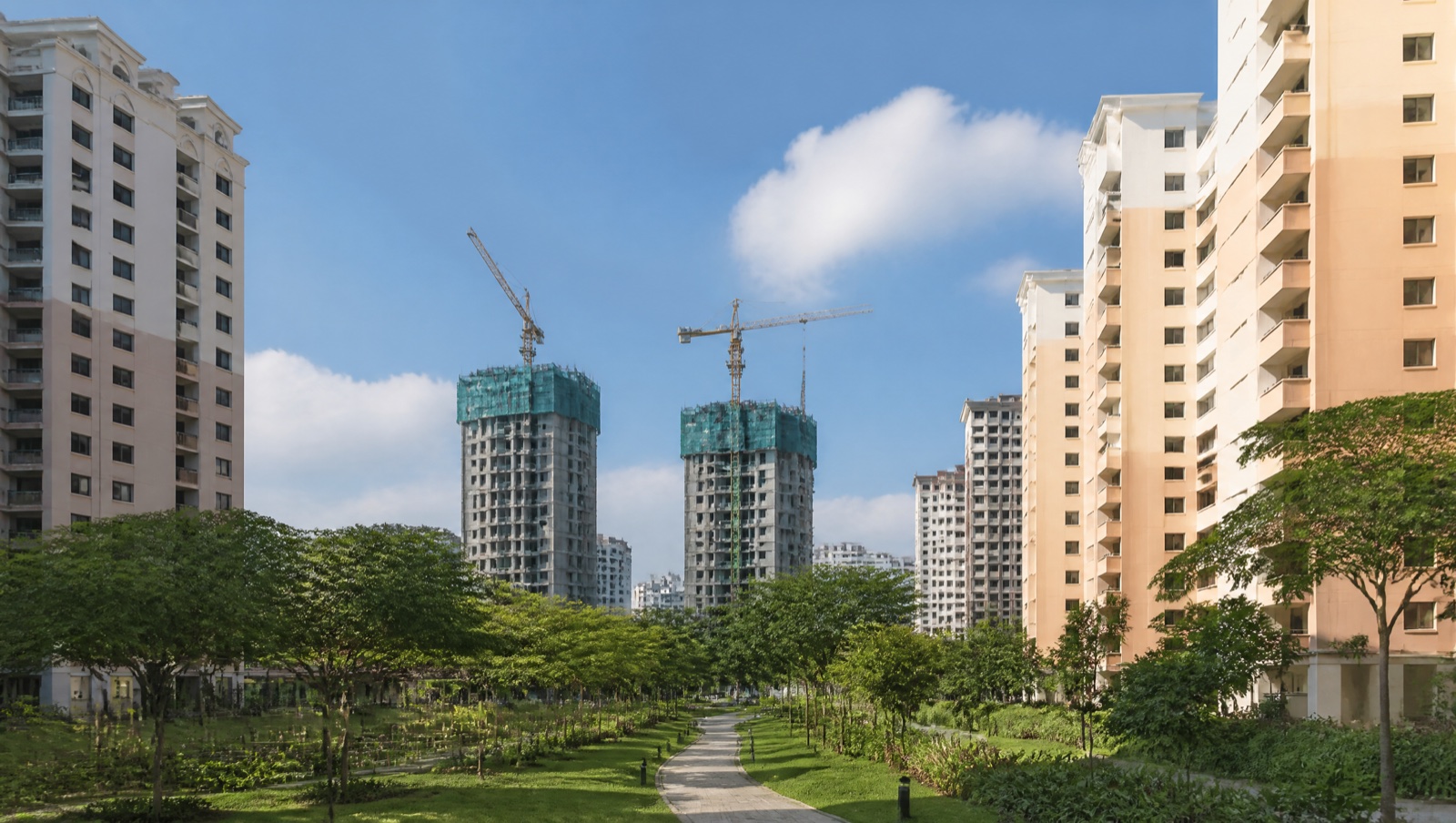
More flats are coming. What the 2026 to 2028 supply wave does to HDB resale prices.
HDB resale prices have fallen two quarters in a row, and the flats reaching their five-year MOP rise from about 13,500 this year to 19,500 in 2028. History says supply caps the upside but demand sets the direction. Here is where the softness lands first, and what it means if you are selling to upgrade.
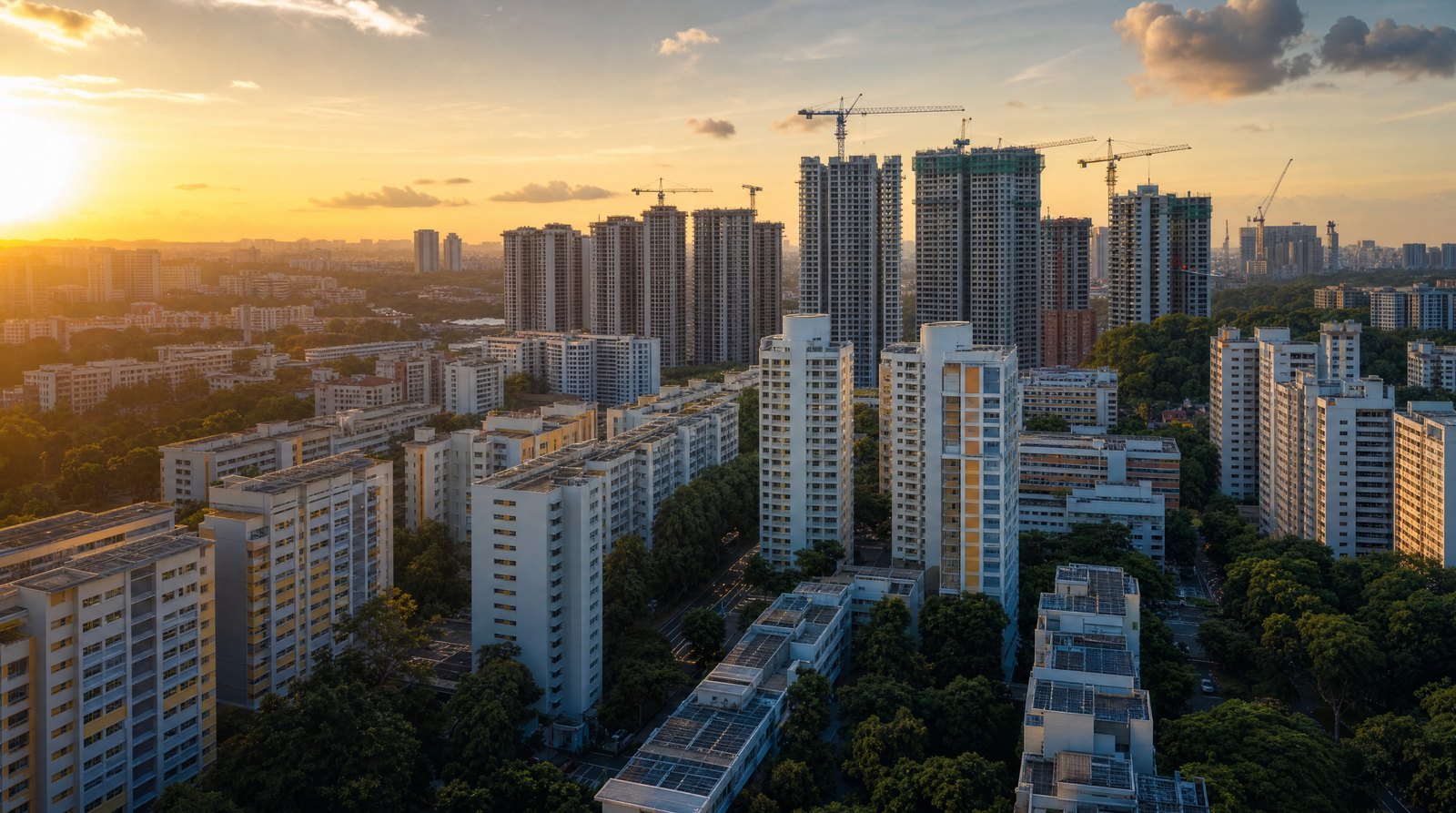
Downgrading from a condo to HDB: what it actually unlocks, and what it costs.
Downgrading from a condo to HDB in Singapore no longer means a 15-month wait, and for most Singapore Citizens it now comes with zero ABSD. What eligibility actually requires, the CPF refund maths, and a worked example of what the move genuinely frees up.

Six quarters of muted growth: is this the upgrader’s window, or a trap?
Private prices have grown at 1% or less for six straight quarters, and HDB resale has now fallen two quarters in a row. That combination is unusual, and it changes the arithmetic of upgrading in a way most sellers have not noticed yet.
Not financial advice. This is general commentary for informational purposes only. It is not financial, investment, mortgage, legal or tax advice, and not a recommendation to buy, sell or hold any property or to take on any loan. Your position depends on your own circumstances.
Rules change. Stamp duties (including ABSD), TDSR, loan-to-value limits and CPF rules are set by IRAS, MAS, HDB and the CPF Board and can change without notice. Figures here are general guidance as at 2026 — confirm your exact position with the relevant authority, your banker or mortgage adviser, and a conveyancing lawyer before committing.
Independent. The Property Collective is not affiliated with, endorsed by, or connected to IRAS, MAS, HDB, the CPF Board, the URA, or any government agency. BuySafe analysis uses historical, publicly available URA transaction data.