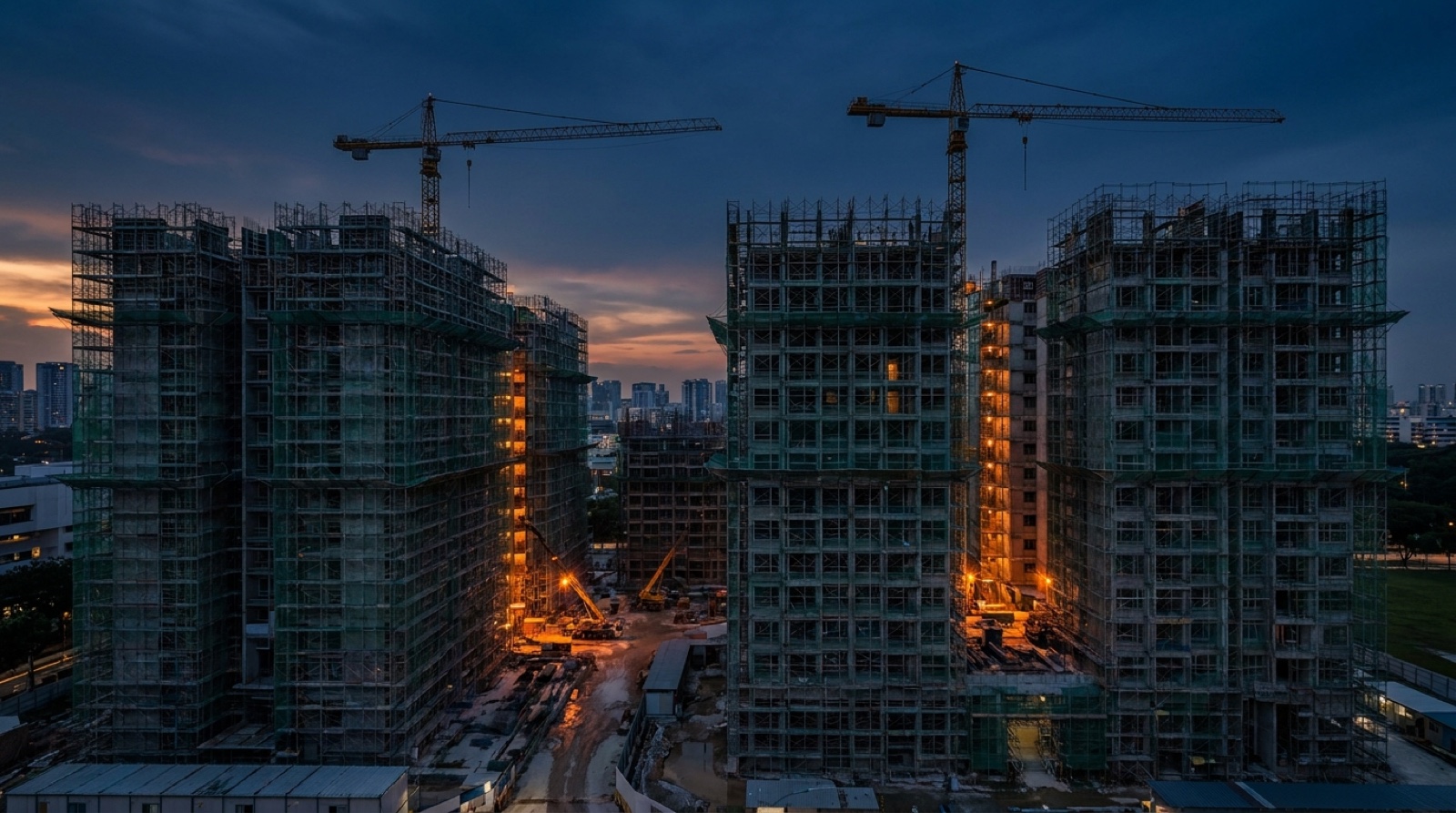
On 28 July 2026, the Ministry of Finance and Ministry of National Development gave housing developers more time to build and sell units on large collective-sale sites, effective for residential land acquired on or after 29 July. It is a technical, developer-side change to the Additional Buyer’s Stamp Duty (ABSD) rules — but if you own a unit in a large, ageing development that has ever whispered the words “en bloc”, it is quietly one of the more relevant announcements of the year.
Sources: MOF/MND and CNA, 28 July 2026. Effective for land acquired on/after 29 Jul 2026.
The rule behind the change
When a developer buys residential land — including a collective-sale site — it pays 40% ABSD: a 5% portion that is never refunded, and a 35% portion paid upfront that can be remitted (refunded) if the developer builds and sells on schedule. Miss the timelines to start construction, finish the project, or sell every unit, and that 35% is clawed back with interest. On a S$300 million site, the 35% is over S$100 million of capital riding on hitting deadlines.
That clawback clock is the single biggest reason the en-bloc market went quiet and “boutique”. On a large site, selling every last unit inside five years is genuinely hard — so developers either avoided big estates or bid low to compensate for the risk. This change targets that exact pressure point.
What changed
The Government created two new size tiers for en-bloc redevelopments and gave them longer runways. To qualify, a redevelopment must yield at least 1.5 times the number of units in the existing development — the rule is aimed at sites that genuinely add housing supply, not like-for-like rebuilds.
Time from land acquisition to complete construction and sell all units. Effective for land acquired on/after 29 Jul 2026.
| Project size | Units yielded | Start build by | Build & sell all by |
|---|---|---|---|
| Standard | Under 700 | 2 years | 5 years |
| Large Site | 700 – 1,399 | 2.5 years | 6 years |
| Mega Site | 1,400+ | 2.5 years | 7 years |
Standard sites are unchanged. Large/Mega sites that also meet another complex-project category get a further 6 months (to 6.5 / 7.5 years). Must yield ≥1.5× existing units to qualify.
The catch: the rate itself did not move
This is the part worth being clear-eyed about. The Government extended the timelines; it did not cut the 40% ABSD. The headline rate — the thing analysts have long called the primary dampener on collective sales — is untouched, and construction costs are still roughly 20–30% higher than they were at the start of the decade. So this is targeted relief, not a green light. It makes large, supply-adding redevelopments more feasible at the margin. It does not, on its own, reopen the floodgates.
It also does nothing for smaller developments, which stay on the five-year clock. If anything, it sharpens the divide: the policy is deliberately steering developer appetite toward big sites that add meaningful housing, which is the Government’s actual goal here.
What it means if you own in a large ageing development
If your development is large enough that a redevelopment could yield 700-plus units at 1.5× the current count — think sizeable older condos and former HUDC-scale estates — your realistic en-bloc odds just improved. A developer weighing your site now has a longer runway to absorb and sell that many units, which lowers the timeline risk that was making big estates uneconomical to bid on. That can translate into more developer interest and firmer bids than the same site would have drawn a week ago.
Temper it, though. Your collective sale still has to clear the 80% consent threshold, a realistic reserve price, and a developer’s underwriting at an unchanged 40% ABSD and today’s build costs. The recent Tan Boon Liat sale showed both sides of that: a large site can transact, but only after the reserve came down to meet what the maths actually supports. This change improves the odds for big sites; it does not remove the discipline.
The bigger picture: a supply-focused day
Read alongside the same-day removal of the 15-month wait-out period, the message is consistent: on 28 July the Government made two moves that both point at housing supply — one freeing demand back into the HDB resale market, the other making it easier to get large private redevelopments built. For buyers, the second-order effect is more future new-launch supply in established locations as big sites become viable again. For owners of large estates, it is a genuine, if measured, improvement in the case for a collective sale.
Next: see the 2026 collective-sale watch list →
Sources
Wondering if your development is a realistic en-bloc candidate under the new timelines? Our collective-sales team reads the site, the yield and the developer maths honestly, before anyone forms a committee.
Keep reading
Related notes.

Hong Heng Garden wants $130 million, and the land next door already set the price.
A small freehold estate on Sembawang Road has launched its first collective sale at $130 million. The interesting number is not the headline, it is the $1,128 psf ppr, and what the state sold the plot next door for ten months earlier.
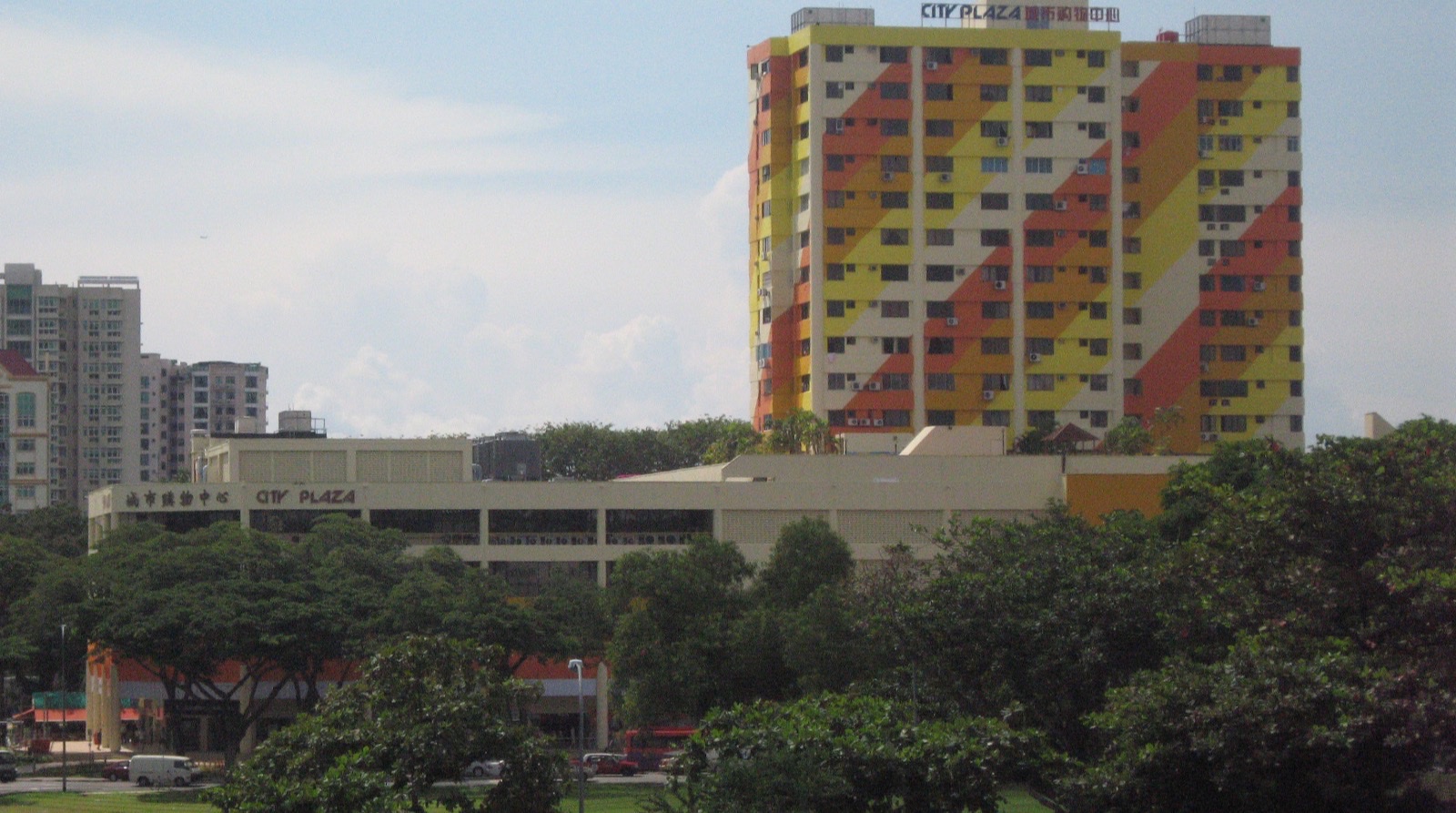
City Plaza is back at $970 million: the en-bloc that missed by 0.7 points returns for round three.
In 2021, City Plaza’s collective sale died at 79.3% consent, a 0.7-point miss. Now the freehold Paya Lebar landmark is on the market again at $970 million, with no ABSD for the buyer, a rezoning path already tested with URA, and a tender closing 13 October. Here is the full read on Singapore’s latest mega en-bloc.
En-bloc consent thresholds are coming down for older condos. Here is who actually gains.
A Bill tabled in Parliament on 4 August would cut the consent threshold to 70% for estates aged 40 to 59 and 65% for those 60 and up, while making it harder to start an attempt and safer to say no. If you own an older condo, or are eyeing one, the maths of your exit just moved.
Developing story. This article reflects the policy change as announced on 28 July 2026, drawn from MOF/MND and official IRAS material. Details may be refined — refer to IRAS for the authoritative rules before acting on any development or collective-sale matter.
General information, not advice. This is general information and market commentary about a developer-side tax change and its likely market effects. It is not financial, investment, legal or tax advice, and not a recommendation in relation to any development, developer or collective sale. Effects on the en-bloc market are directional, not guaranteed. Seek independent professional advice on your own situation.
Independent. The Property Collective is a team within PropNex Realty and is not affiliated with, endorsed by, or connected to MOF, MND, IRAS or any government agency. Figures are as reported by the ministries and CNA.