HDB closed the November 2026 Build-To-Order exercise at 11.59pm on Wednesday, 11 November, and its final count is bigger than the number that ran in the evening news. The Flat Portal shows 37,413 applicants for 7,964 flats, 4.7 applicants per flat, against the 35,603 that National Development Minister Chee Hong Tat cited at 5pm, which the papers worked out at 4.5 per flat. Another 1,810 applicants came in over the last seven hours.
That makes this the busiest ballot in four years: more applicants than October 2024’s 35,678, and the highest rate since August 2022, when 39,136 people chased 4,993 flats at 7.8 per flat. The seven projects did not share the crowd evenly.
Toa Payoh Hillside and the two Bayshore projects took 56% of all applications between them, and Sembawang Anchor, the project with the cheapest four-room flats and the shortest wait, was the only one where first-timer families were nearly guaranteed a flat.
Source: HDB Flat Portal, number of applications received as at 11.59pm on 11 November 2026. Rates are HDB’s; the overall rate is our division of applicants by flats.
How many people applied for the November 2026 BTO?
HDB’s final count is 37,413 applicants for 7,964 flats, or 4.7 applicants per flat, the highest rate since August 2022 and the largest number of applicants since that same exercise. The jump is steep: June’s exercise closed at 23,894 applicants for 6,952 flats (3.4 per flat) and February’s at 15,044 for 4,692 (3.2), so November drew 57% more applicants than June on 15% more flats. The reasons are not mysterious.
This was the first ballot under the raised income ceilings of $16,000 for families and $8,000 for singles, which took effect for HFE letter applications from 24 August; it was the first new supply in Tengah since October 2023 and in Bayshore since October 2024; and it carried the exercise’s only Prime project, beside Caldecott station in Toa Payoh.
Mr Chee said the increase was “not unexpected” given the wider pool of eligible households, and noted that HDB has launched 23,928 new flats in 2026: 19,608 BTO flats across the year’s three exercises plus 4,320 Sale of Balance Flats.
HDB Flat Portal final counts for February, June and November 2026 (as at 11.59pm on each closing day); HDB and news reports for October 2024 and August 2022. Overall rate is applicants divided by flats, rounded to one decimal.
| Exercise | Flats | Applicants | Per flat |
|---|---|---|---|
| August 2022 | 4,993 | 39,136 | 7.8 |
| October 2024 | 8,573 | 35,678 | 4.2 |
| February 2026 | 4,692 | 15,044 | 3.2 |
| June 2026 | 6,952 | 23,894 | 3.4 |
| November 2026 | 7,964 | 37,413 | 4.7 |
HDB says applications include households that applied in earlier launches and are still waiting to book, on average about 20% of the total. The 5pm figures reported on 11 November (35,603 applicants, 4.5 per flat) were a snapshot, not the close.
The medians moved too. Among first-timer families applying for three-room and larger flats, the median application rate was 2.7 at the close, against 1.4 in June and 0.9 in February. Among first-timer singles applying for two-room Flexi flats it was 8.8, up from 7.8 in June and 7.3 in February.
Those medians matter because HDB’s own advice is to look for categories below them: half the three-room and larger categories in this exercise were at or under 2.7 for a first-timer family, and HDB shortlists up to twice the supply, so a rate near one still gives most applicants a queue number.
Which November 2026 BTO project was the most oversubscribed?
Toa Payoh Hillside, the exercise’s only Prime project, where 6,317 applicants competed for 584 four-room flats: 7.0 per flat for first-timer families and 45.4 for second-timers, who are capped at 10% of the supply. Including its 592 two-room Flexi flats and 256 Community Care Apartments, the project drew 10,344 applicants for 1,432 units, 7.2 per flat, and more than a quarter of everyone who applied in the exercise.
The table sets every project against the others; the rates for first-timer families and singles are HDB’s, the overall rate is ours.
HDB Flat Portal, as at 11.59pm on 11 November 2026. Applicants and units are summed across each project’s flat types. First-timer family rate shown for 4-room flats; first-timer singles rate for 2-room Flexi flats. Bayshore Sails and Bayshore Oasis are reported together because HDB pools their 2-room Flexi and 4-room supply.
| Project · class | Units | Applicants | Per flat | FT families, 4R | FT singles, 2R |
|---|---|---|---|---|---|
| Toa Payoh Hillside · Prime, 11% | 1,432 | 10,344 | 7.2 | 7.0 | 8.5 |
| Plantation Dew · Standard | 710 | 5,024 | 7.1 | 5.5 | 19.2 |
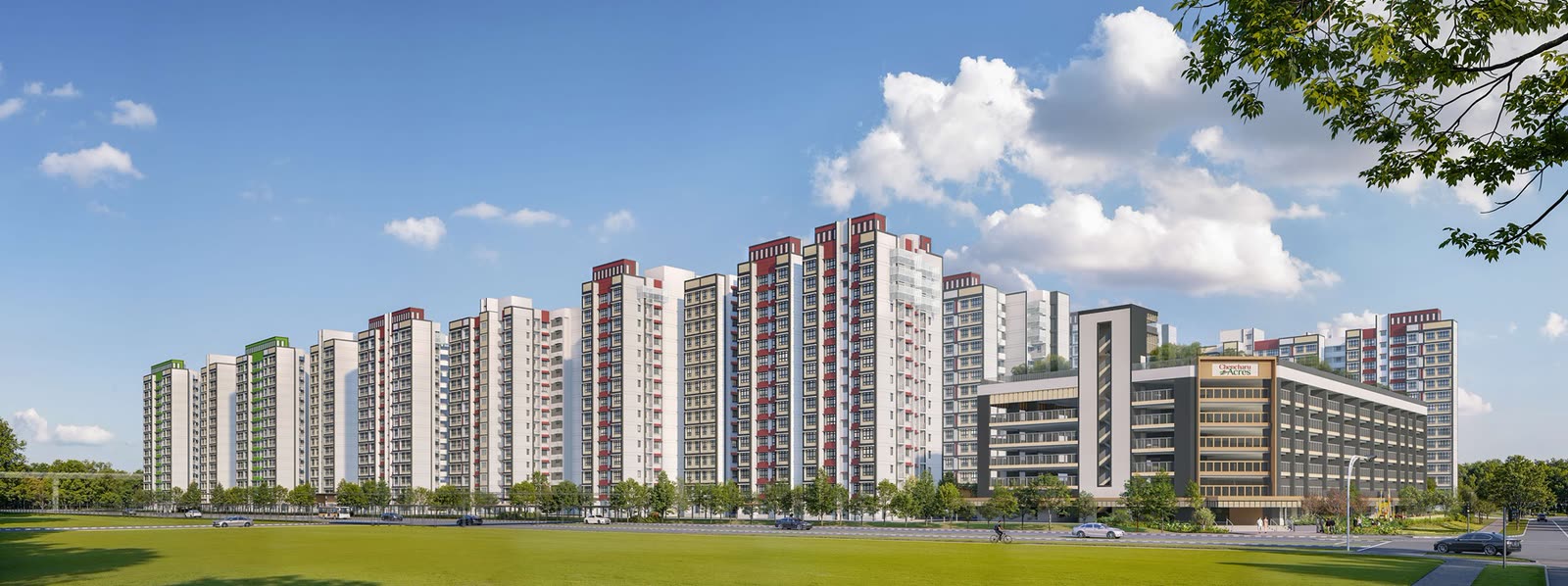
| Chencharu Acres · Standard | 1,582 | 7,903 | 5.0 | 2.7 | 9.5 |
| Bayshore Sails and Oasis · Plus, 9% | 2,492 | 10,769 | 4.3 | 3.2 | 6.1 |
| Merpati Meadow · Plus, 8% | 438 | 1,637 | 3.7 | 2.4 | 9.0 |
| Sembawang Anchor · Standard | 1,310 | 1,736 | 1.3 | 0.7 | 3.7 |
| All seven projects | 7,964 | 37,413 | 4.7 | Median 2.7 | Median 8.8 |
The percentage after Plus and Prime is the subsidy recovery HDB collects on the resale price or valuation, whichever is higher, when the flat is sold after its ten-year minimum occupation period. Toa Payoh Hillside’s units include 256 Community Care Apartments, which drew 525 applicants, 2.1 per unit.
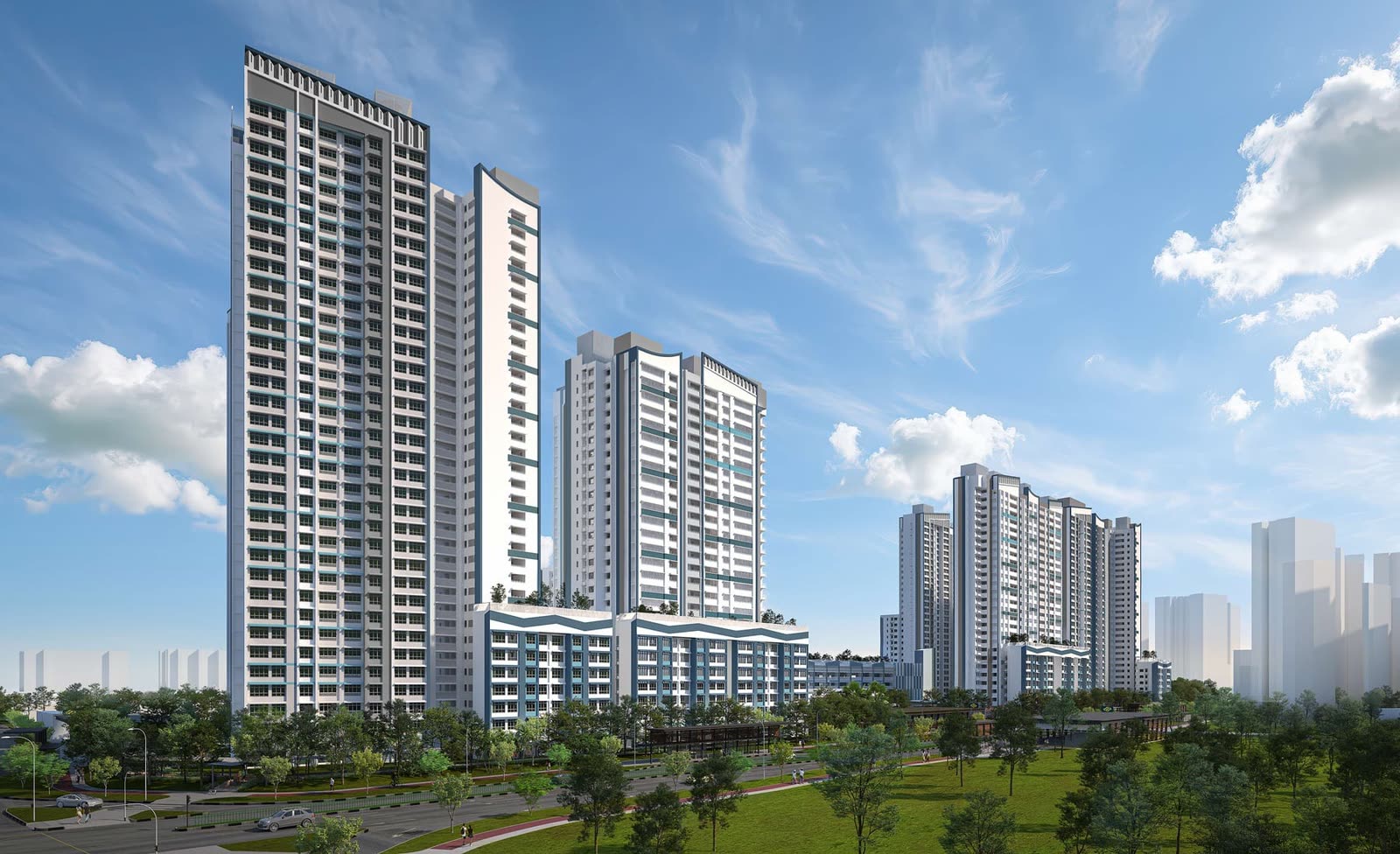
Three things stand out beyond the headline. First, the Bayshore pair, not Toa Payoh, attracted the most applicants of any project: 10,769 across Bayshore Sails and Bayshore Oasis, spread over 2,492 flats, which is why their first-timer rate for four-room flats is a calmer 3.2. The pressure point there was the 90 three-room flats at Bayshore Sails, where second-timer families ran at 57.4 per flat, the highest rate of any category in the exercise.
Second, Plantation Dew in Tengah was the most oversubscribed Standard project by a distance: 5.5 first-timer families per four-room flat, 4.0 per five-room or 3Gen flat, and 19.2 first-timer singles per two-room Flexi flat, more than double the singles median.
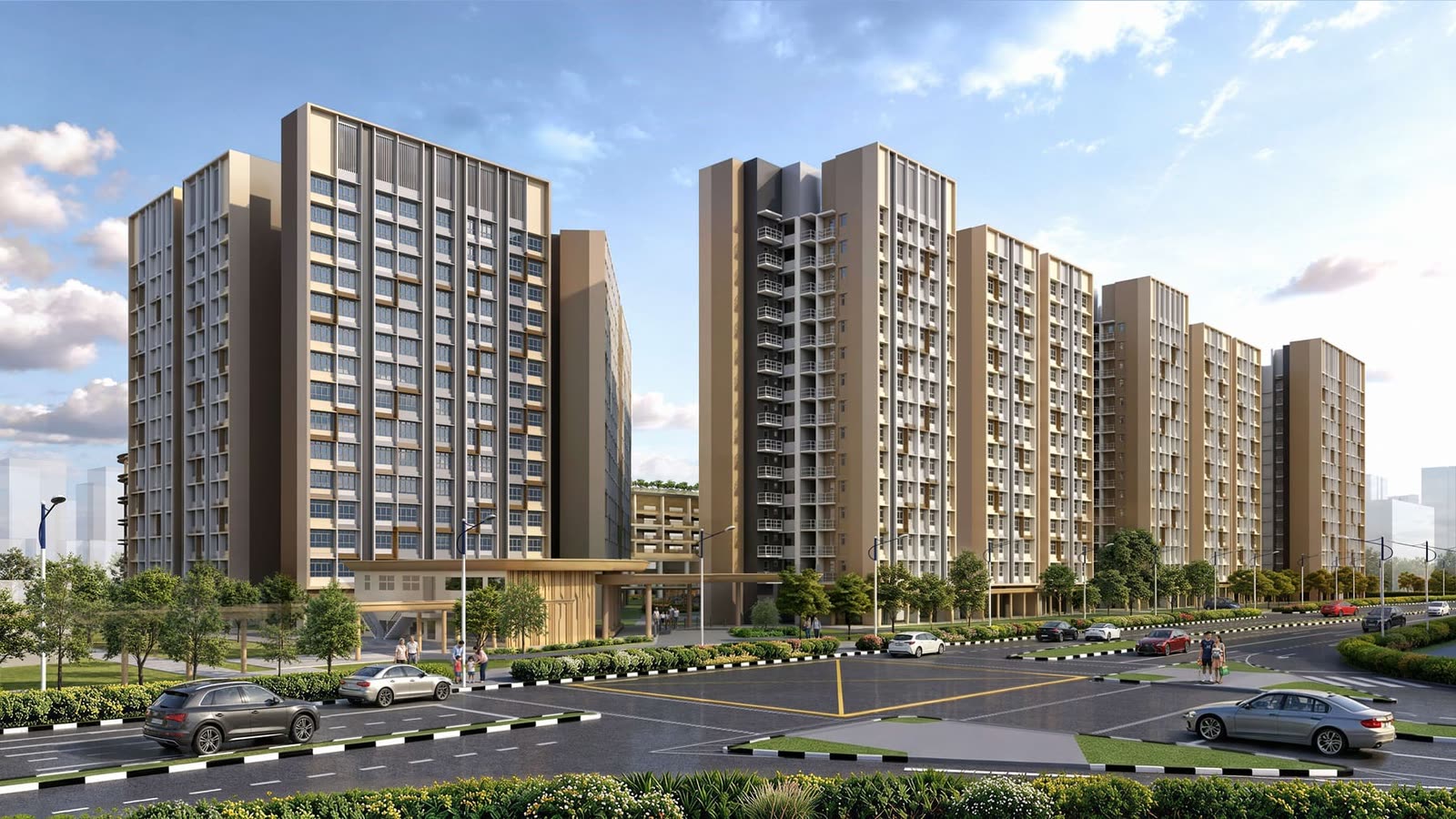
PropNex chief executive Kelvin Fong pointed to pent-up demand, since Tengah’s last launch, Plantation Edge I and II in October 2023, drew 2.3 applicants per flat, and to the project’s pricing, with ERA’s Eugene Lim noting that two-room Flexi flats there start at $11,000 after grants. Third, Chencharu Acres in Yishun, the largest Standard project in the exercise, landed exactly on the median: 2.7 first-timer families per four-room flat, 2.9 per five-room, and 7,903 applicants in all.
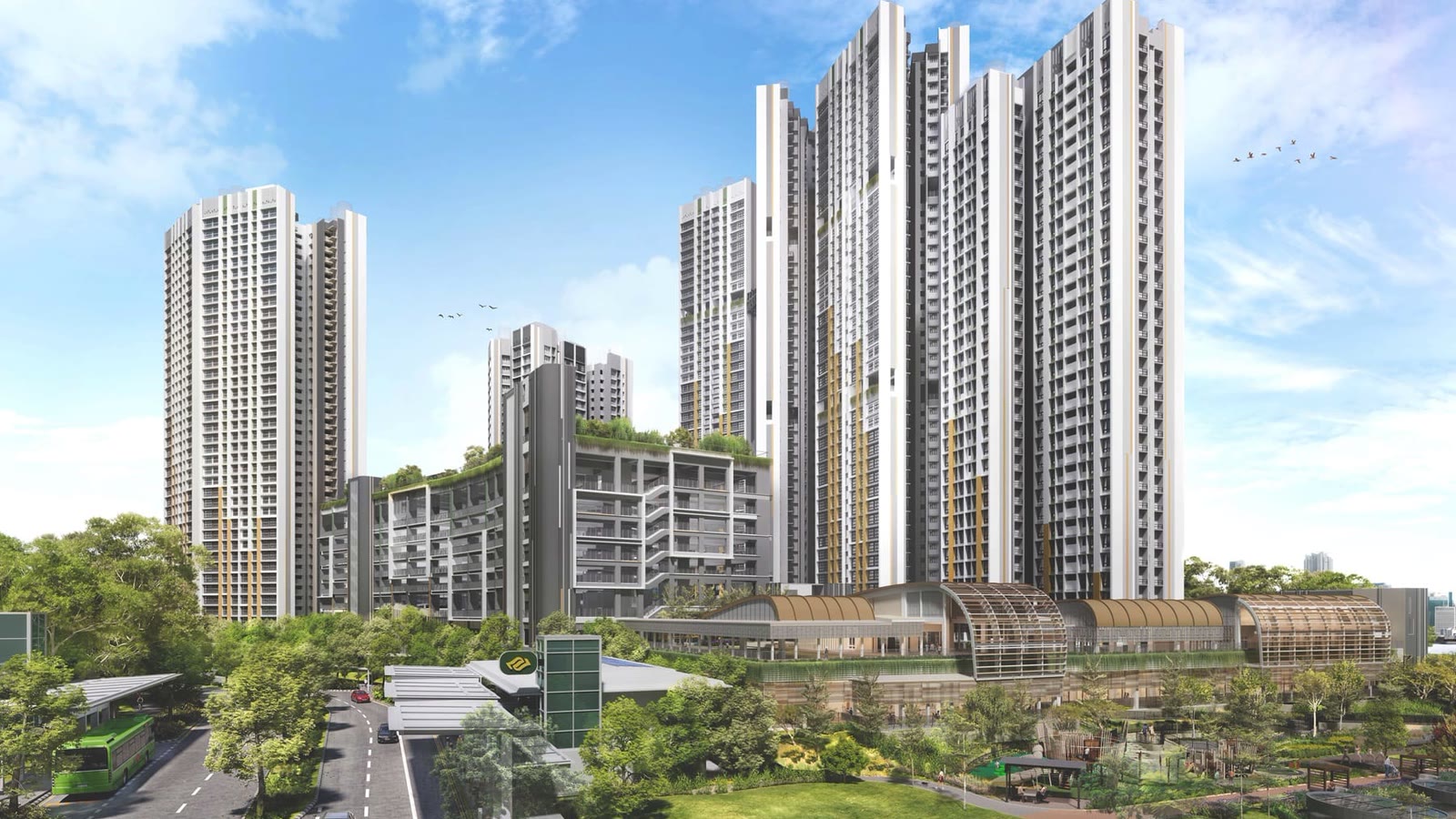
Toa Payoh Hillside earned its rate. It sits next to Caldecott MRT station, where the Thomson-East Coast Line meets the Circle Line; HDB’s Toa Payoh West master plan, unveiled on 31 October, puts the town’s first shopping mall, a 1.2-hectare wellness park and a car-free corridor to Lorong 1 around that station over the coming decade; and the Toa Payoh Integrated Development nearby brings sports facilities, a polyclinic and a library by 2030.
Huttons’ Lee Sze Teck noted that some four-room units come with balconies, rare in a BTO flat, and that the dearest four-room flat in the project is priced at $832,000. Realion’s Christine Sun read the demand as buyers betting that the location will carry the resale price past the 11% recovery.
Our own launch guide put the project’s cheapest four-room flat, $558,000, at 32% below HDB’s nearby resale comparables of $820,000 to $1.2 million, the smallest gap of the seven projects, and buyers applied anyway.
Why did Sembawang Anchor fall flat despite the shortest wait?
Because the people who wanted a Sembawang flat already have one. Sembawang Anchor was the only project with Shorter Waiting Time flats, all 1,310 of them, with keys about 34 months after booking, and four-room flats from $312,000, the cheapest in the exercise and 47% below the nearest resale comparables.
It still closed at 1.3 applicants per flat overall, 0.7 first-timer families per four-room flat and 0.4 per five-room flat, the only two categories of three-room and larger flats in the exercise with fewer first-timer family applicants than flats set aside for them.
Realion’s Christine Sun said that was within expectations because almost 4,000 flats were launched in Sembawang in February and June; on HDB’s own counts, Sembawang Deck and Sembawang Voyage in February offered 1,950 flats and Sembawang Portico and Sembawang Brook in June another 2,035, so with Anchor the town has put 5,295 new flats on the ballot in 2026 alone.
Huttons supplied the second reason. The project is bounded by Admiralty Lane and Sembawang Drive; Huttons’ Lee Sze Teck cited the distance from an MRT station, which The Straits Times put at a 15 to 20 minute walk to Sembawang station, and the agency called that distance “a big minus for applicants”.
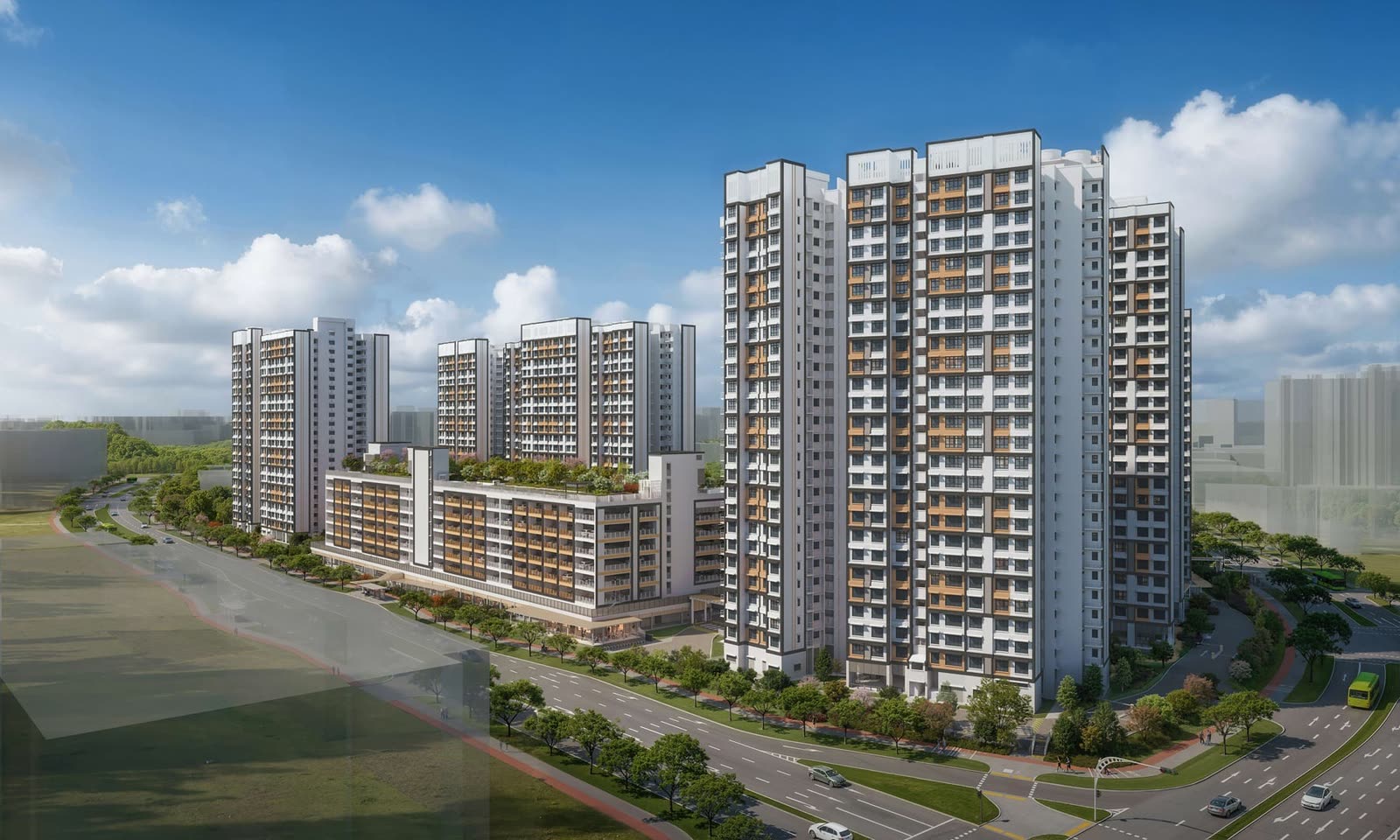
For the households that did apply, this is the best news in the exercise. HDB shortlists more applicants than flats, so a first-timer family at 0.7 is all but certain of a queue number and a real choice of unit when booking opens, and ERA’s Eugene Lim made the same point: the quiet response is a clear advantage to serious applicants who want a flat sooner.
The question those applicants should be asking is not whether they will get the flat. It is what the ballot just told them about the day they sell it.
How do the floor plans compare across the seven projects?
The Standard four-room flats are the biggest and the cheapest: 90 sqm of internal floor area at Sembawang Anchor, Plantation Dew and Chencharu Acres, against 86 sqm at all four Plus and Prime projects, where the cheapest four-room flat costs $192,000 to $268,000 more than the cheapest in any Standard project.
HDB publishes a furnished floor plan, which it calls a layout idea, for every flat type on the Flat Portal, and set side by side they show why the gap is a price decision rather than a design one. Every four-room plan in the exercise is the same three-bedroom, two-bathroom template with a household shelter, service yard and air-con ledge; the Plus and Prime versions trim about four square metres from it.
The table gives HDB’s internal floor areas for every flat type on offer, and the three boards that follow put the plans beside each other.
HDB Annex A, 4 November 2026. Internal floor area is measured to the centre line of the flat’s walls; the bracketed figure adds the air-con ledge. The last column is our arithmetic: HDB’s lowest four-room price before grants divided by the internal floor area.
| Project | 2-room Flexi | 3-room | 4-room | 5-room and 3Gen | 4-room entry, per sqm |
|---|---|---|---|---|---|
| Sembawang Anchor | 38 and 46 (40, 48) | 66 (69) | 90 (93) | 110 (113) | $3,467 |
| Plantation Dew | 38 and 46 (40, 48) | 66 (69) | 90 (93) | 110 (113) · 3Gen 115 (121) | $3,767 |
| Chencharu Acres | 38 and 46 (40, 48) | 66 (69) | 90 (93) | 110 (113) | $3,922 |
| Merpati Meadow | 38 and 46 (40, 48) | None | 86 (89) | None | $6,337 |
| Toa Payoh Hillside | 38 and 46 (40, 49) | None | 86 (90) · with balcony 89 (93) | None · CCA 36 (39) | $6,488 |
| Bayshore Oasis | 38 and 46 (40, 48) | None | 86 (90) | None | $6,500 |
| Bayshore Sails | 36 to 38 and 46 (38 to 40, 48) | 64 (67) | 86 (90) | None | $6,744 |
Two-room Flexi flats come in a Type 1 and a larger Type 2. The Toa Payoh Hillside four-room flats with a balcony are 156 of its 584 four-room units and start at $619,000. Plantation Dew’s white flats share the floor areas above but are sold without internal partition walls and some electrical points, at $6,000, $8,600 and $9,000 less for the three-, four- and five-room layouts.
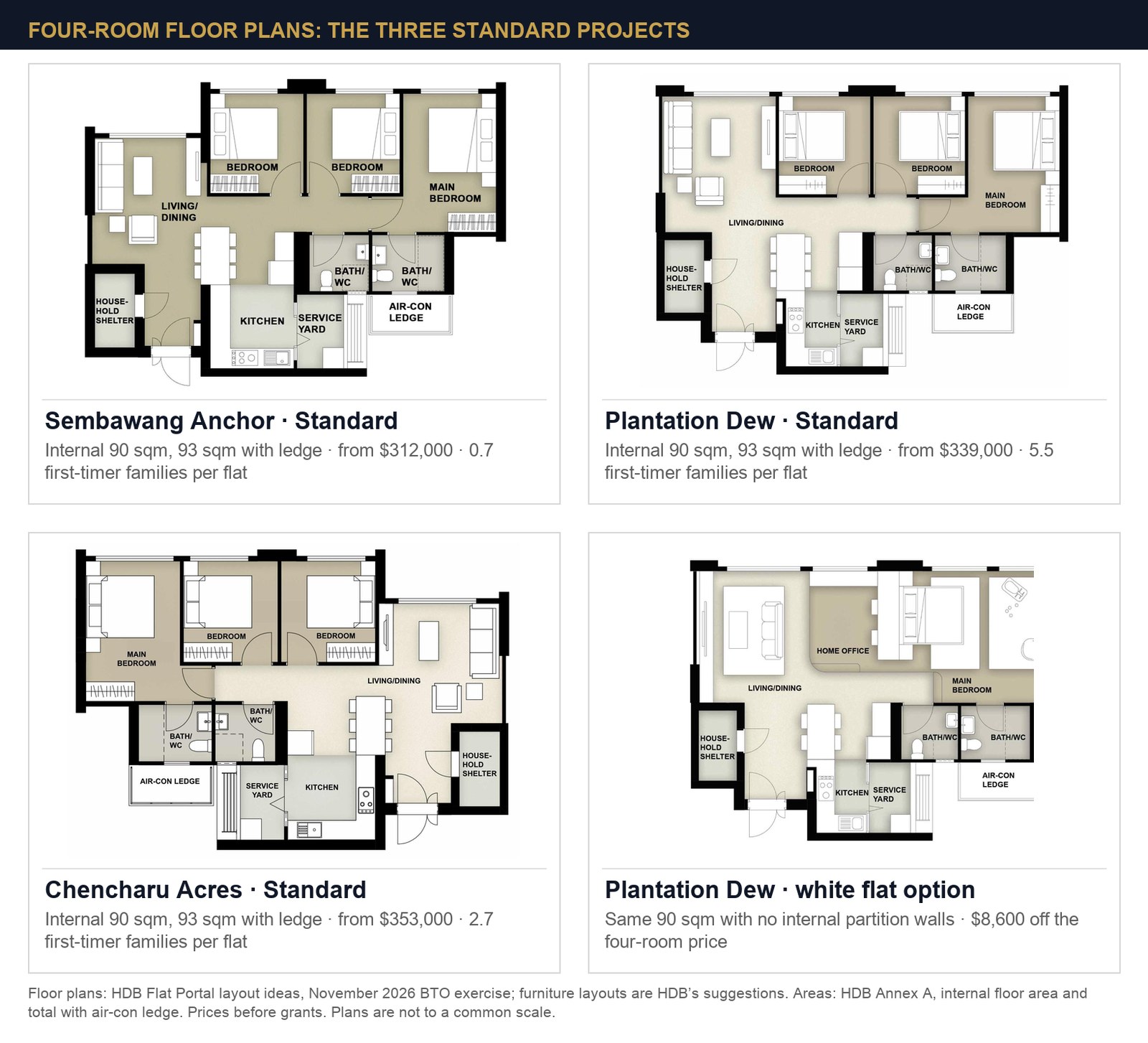
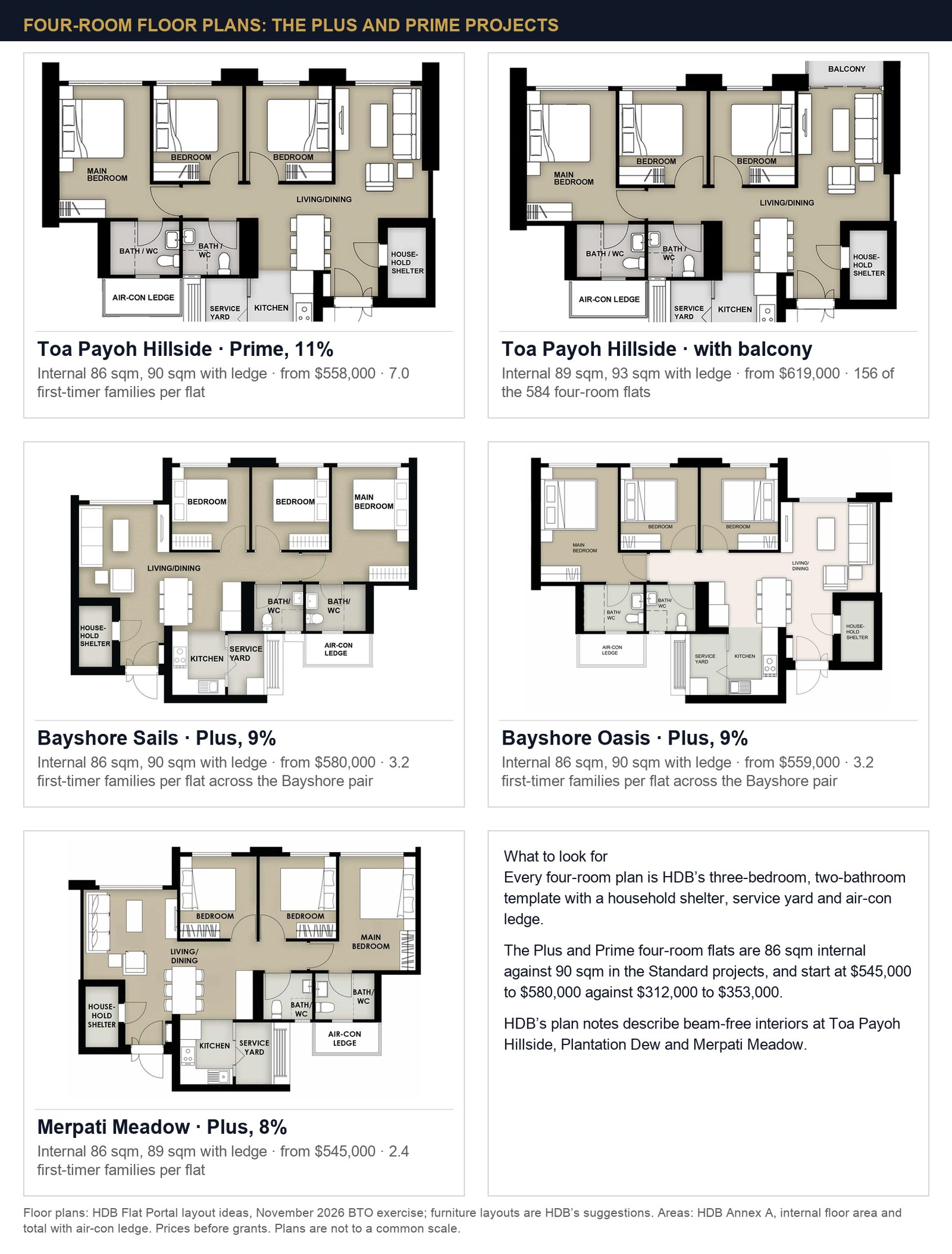
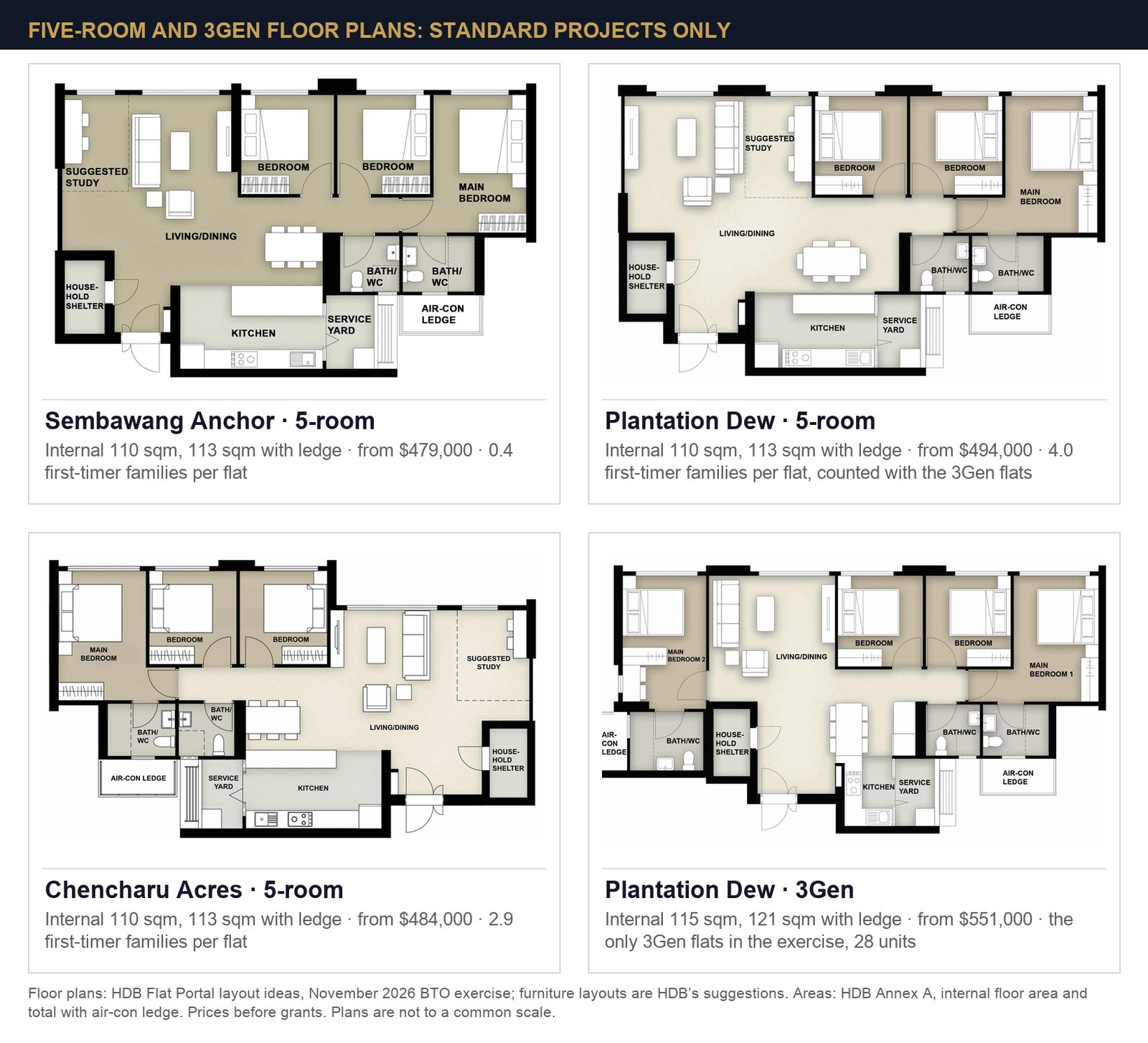
Three details in the plans matter for the exit as much as for the move-in. The first is the balcony at Toa Payoh Hillside: 156 of the 584 four-room flats have one, they are 89 sqm internal rather than 86 and priced from $619,000 rather than $558,000, and balconies are rare enough in HDB flats that Huttons’ Lee Sze Teck named them among the rare attributes buyers were willing to pay more for.
The second is the white flat at Plantation Dew, offered for three-, four- and five-room units with the same floor area as the default layout but no internal partition walls, which HDB prices $6,000 to $9,000 lower; a buyer who wants the standard layout can still choose it.
The third is simple arithmetic: at the lowest prices, the Standard projects sell four-room space at $3,467 to $3,922 per internal square metre and the Plus and Prime projects at $6,337 to $6,744, so a resale buyer in the 2040s will be comparing an 86 sqm flat with a recovery clause against 90 sqm flats without one, in towns where the 2026 price gap at entry was already $192,000 to $268,000.
HDB’s plan notes also describe beam-free interiors at Toa Payoh Hillside, Plantation Dew and Merpati Meadow, which widens the renovation options in all three.
What do application rates say about exit demand?
Less than most buyers assume, and more than nothing. An application rate measures how many eligible households wanted a new, subsidised flat in that spot this week, at that price, under those rules. Exit demand is a different question: how many buyers will want your specific flat on the resale market in the mid-2030s, when the Standard flats clear their five-year minimum occupation period, or the early 2040s, when the Plus and Prime flats clear their ten.
Four things decide that, and only one of them is in the ballot numbers. The ballot shows which locations buyers already rank highly, and location persists.
The rules decide who is allowed to buy from you. A Standard flat can be sold to any eligible household and rented out whole after its MOP.
A Plus or Prime flat can only be sold to a buyer who clears HDB’s eligibility conditions, including the same $16,000 household income ceiling as a new flat and a 30-month wait-out after disposing of any private residential property, with resale Prime buyers held to the full set of new-flat conditions. It can never be rented out whole, and it returns 8% to 11% of the price to HDB.
Under HDB’s framework a single aged 35 or over can buy any resale Plus flat other than a 3Gen flat, but only a two-room Prime flat. Supply decides how many sellers you compete with, and the estates differ enormously here. And the entry price decides how much room you have before the resale market has to do any work at all.
Popular now and easy to sell later are not the same test. Toa Payoh passes both. Bayshore passes the first. Sembawang passes neither.
Which November 2026 BTO project is best for exit demand, in our view?
Toa Payoh Hillside, narrowly, with Merpati Meadow a close second and Sembawang Anchor last. That is our opinion, not a forecast, and we have scored it in the open so you can disagree with the weights.
We gave each project one to five points on five tests: the demand this ballot revealed, transport and location, the breadth of the buyer pool the flat’s rules allow at resale, the competing supply likely to be on the market when you can first sell, and the gap between the entry price and HDB’s resale comparables. Where totals tie, the ballot decides, because it is the only test that is measured rather than judged.
Our scores, one (weak) to five (strong), on the five tests described above. Ballot demand from HDB’s final rates; location from HDB and MyNiceHome project pages; buyer-pool rules from HDB’s Standard, Plus and Prime framework; supply from HDB master plans and launch data; entry gap from HDB’s Annex A resale comparables. Ties are broken by the ballot-demand score.
| Rank · project | Ballot | Location | Buyer pool | Supply at exit | Entry gap | Score |
|---|---|---|---|---|---|---|
| 1 · Toa Payoh Hillside (Prime) | 5 | 5 | 1 | 4 | 2 | 17 |
| 2 · Merpati Meadow (Plus) | 2 | 4 | 2 | 5 | 4 | 17 |
| 3 · Plantation Dew (Standard) | 4 | 2 | 5 | 1 | 4 | 16 |
| 4 · Bayshore Sails and Oasis (Plus) | 4 | 4 | 2 | 2 | 3 | 15 |
| 5 · Chencharu Acres (Standard) | 3 | 2 | 5 | 2 | 3 | 15 |
| 6 · Sembawang Anchor (Standard) | 1 | 1 | 5 | 1 | 5 | 13 |
Buyer pool: Standard flats score five because any eligible household can buy and the flat can be rented out whole after the MOP; Plus flats score two for the income-ceiling test on buyers, the ban on whole-flat rental and the 8% to 9% recovery; Prime scores one because singles may buy only a two-room resale Prime flat and the recovery is 11%. Supply at exit counts flats of similar age likely to be for sale in the same estate around the first possible resale date.
The case for each project, and the catch
The deepest demand in the exercise, at an interchange station in a mature central town that is about to get its first mall, with 1,432 flats on offer where the resale comparables already run from $820,000 to $1.2 million. The catch is the rules: a ten-year MOP, an 11% recovery, no whole-flat rental ever, and a buyer who must clear HDB’s income ceiling. More than 6,000 new homes are planned in Toa Payoh West over the next decade, mostly public housing with some private; the HDB flats among them are likely to be Plus or Prime, carrying the same ten-year lock, so few of them should reach the resale market before yours does.
The quiet pick. Only 271 four-room flats on Merpati Road near Mattar MRT station on the Downtown Line, in a pocket where HDB’s resale comparables sit at $920,000 to $1.1 million, with the lowest recovery of the four Plus and Prime projects and almost no same-age supply to compete with at exit. The ballot was lukewarm at 2.4 first-timer families per flat, and the Geylang address on the paperwork will always need explaining to a buyer who has not walked the street.
The best Standard flat for exit: no recovery, a five-year MOP that opens a resale window around 2035, any eligible buyer including a landlord, a 41% entry gap, the only 3Gen flats in the exercise plus white-flat layouts, and the JRL station (JE2) due with the line’s second stage in 2028. The catch is Tengah itself. The town is planned for about 42,000 homes, roughly 30,000 of them HDB flats, so your resale will share the market with thousands of flats of near-identical age.
The most applicants of any project, Bayshore MRT on the Thomson-East Coast Line, East Coast Park and the future Bedok South station: as a place to live it is the strongest Plus offer in years. For exit, the arithmetic is harder. The estate is planned for about 7,000 HDB flats and 3,000 private homes by the mid-2030s, every one launched so far a Plus flat with the same restricted buyer pool, and the first 1,444 from October 2024 reach the market a year or two before yours.
Standard rules, a mature town in Yishun, Khatib MRT station on the North-South Line and a future integrated development with a bus interchange and hawker centre. The ballot put it exactly on the median at 2.7, which is respectable rather than compelling. The catch is the same as Tengah’s on a smaller scale: Chencharu is planned for about 10,000 homes by 2040, at least 80% of them public, so the estate will keep adding sellers of similar-age flats through your MOP and beyond.
The cheapest four-room entry, the earliest keys and the widest buyer pool, and still last, because the ballot said what buyers think of the location and the supply says the rest. First-timer families ran at 0.7 and 0.4 per flat, Sembawang MRT is about a 15 to 20 minute walk, and 5,295 flats have been launched in the town this year alone, all of them Standard, all reaching the resale market within a year or two of each other. Buy it to live in, with a 47% gap as your cushion, not for the exit.
Two caveats belong next to the scorecard. The first is that the Plus and Prime penalties are real but not fatal: the resale comparables that HDB itself published for Toa Payoh, Geylang and Bayshore are the prices of flats that do not carry those rules, and nobody yet knows how much a Plus or Prime label will discount a flat in 2040, because the earliest Prime Location Public Housing flats only complete from 2027, so the first of them cannot be resold until around 2037.
We have scored the rules as a drag on the buyer pool, not as a prediction of price. The second is that supply cuts both ways. A town that adds 10,000 homes also adds the mall, the interchange and the schools that make a flat easier to sell; our supply test is about how many sellers you will stand beside, not whether the estate improves.
What happens next for November 2026 BTO applicants?
HDB will ballot the applications and issue queue numbers over the coming weeks, and those shortlisted can expect to book their flats at HDB Hub between March and June 2027, The Straits Times reported. HDB shortlists up to twice the number of flats, so a queue number is an invitation, not a flat, and applicants far down the queue in the hot categories, Toa Payoh Hillside’s four-room flats above all, should assume they will not reach the booking stage.
If you applied for a category above the median, the February 2027 exercise is your fallback: about 4,300 flats in Bishan, Tampines, Tengah and Toa Payoh, including a second Mount Pleasant project and Community Care Apartments at one of the Tampines sites, alongside a Sale of Balance Flats exercise of about 5,000 flats. HDB wants HFE letter applications and all supporting documents in by 15 December 2026 for that round.
If you applied below the median, start the money conversation now, because a four-room flat at Sembawang Anchor or Chencharu Acres books in the first half of 2027 and the option fee, the downpayment schedule and the loan choice follow quickly.
The November count settles one argument and opens another. Buyers will accept a ten-year lock and an 11% recovery for a flat beside an interchange, and they will walk past the fastest project in the exercise, with the cheapest four-room flats, if the walk to the train is twenty minutes.
What they will pay for either flat in 2035 or 2041 is still unwritten, and the honest version of our ranking is that the location-led projects and the rule-led projects are closer than their ballot rates suggest. Pick the one whose rules you can live with, in the estate whose supply you can see coming, and know the exit before you enter.
Talk through your queue number or the February ballot →
Sources
- HDB Flat Portal: Flat supply and applications received, November 2026 BTO exercise (as at 11.59pm, 11 Nov 2026)
- HDB Flat Portal: layout ideas (floor plans) and project details for the November 2026 BTO projects
- HDB Flat Portal: Flat supply and applications received, June 2026 and February 2026 BTO exercises
- HDB: HDB launches 7,964 flats across seven projects in November 2026 BTO sales exercise (4 Nov 2026)
- MyNiceHome by HDB: November 2026 sales launch, project locations and transport links
- HDB: Standard, Plus, and Prime housing framework (resale, rental and buyer conditions)
- HDB: HDB unveils master plan for Toa Payoh West (31 Oct 2026)
- HDB: HDB unveils masterplan for Chencharu (12 Jun 2024)
- LTA: Jurong Region Line, stages and opening years
- The Straits Times: Toa Payoh, Tengah flats most popular in Nov BTO launch; highest application rates since Aug 2022 (11 Nov 2026)
- CNA: First BTO exercise under raised income ceiling set to draw highest number of applications in two years (11 Nov 2026)
- EdgeProp: Hot demand for BTO flats in November 2026 launch amid new income ceilings, more SWT homes (11 Nov 2026)
- The Straits Times: First BTO flats in Bayshore, Kembangan integrated development to be launched in October (20 Jun 2024; 7,000 HDB flats and 3,000 private homes planned in Bayshore)
- HDB: Unveiling the masterplan for Tengah, at home with nature (8 Sep 2016; about 42,000 homes)
Holding a queue number, or planning the February 2027 ballot? We map the booking order, the Plus and Prime conditions and the exit for the project you are about to commit ten years to.
Keep reading
Related notes.
The HFE letter, timed: a nine-month validity, a 30-day trap, and the one window when you cannot apply at all.
Singapore’s HDB Flat Eligibility (HFE) letter gates every flat purchase: a new BTO flat, a resale flat, your CPF Housing Grant and your HDB loan all run through this one document. It is valid for nine months from issue, the formal application must follow your preliminary check within 30 calendar days, and HDB switches the whole e-service off during a sales launch. Here is exactly how to apply, what HDB checks, and the timing mistakes that cost buyers an entire BTO exercise.
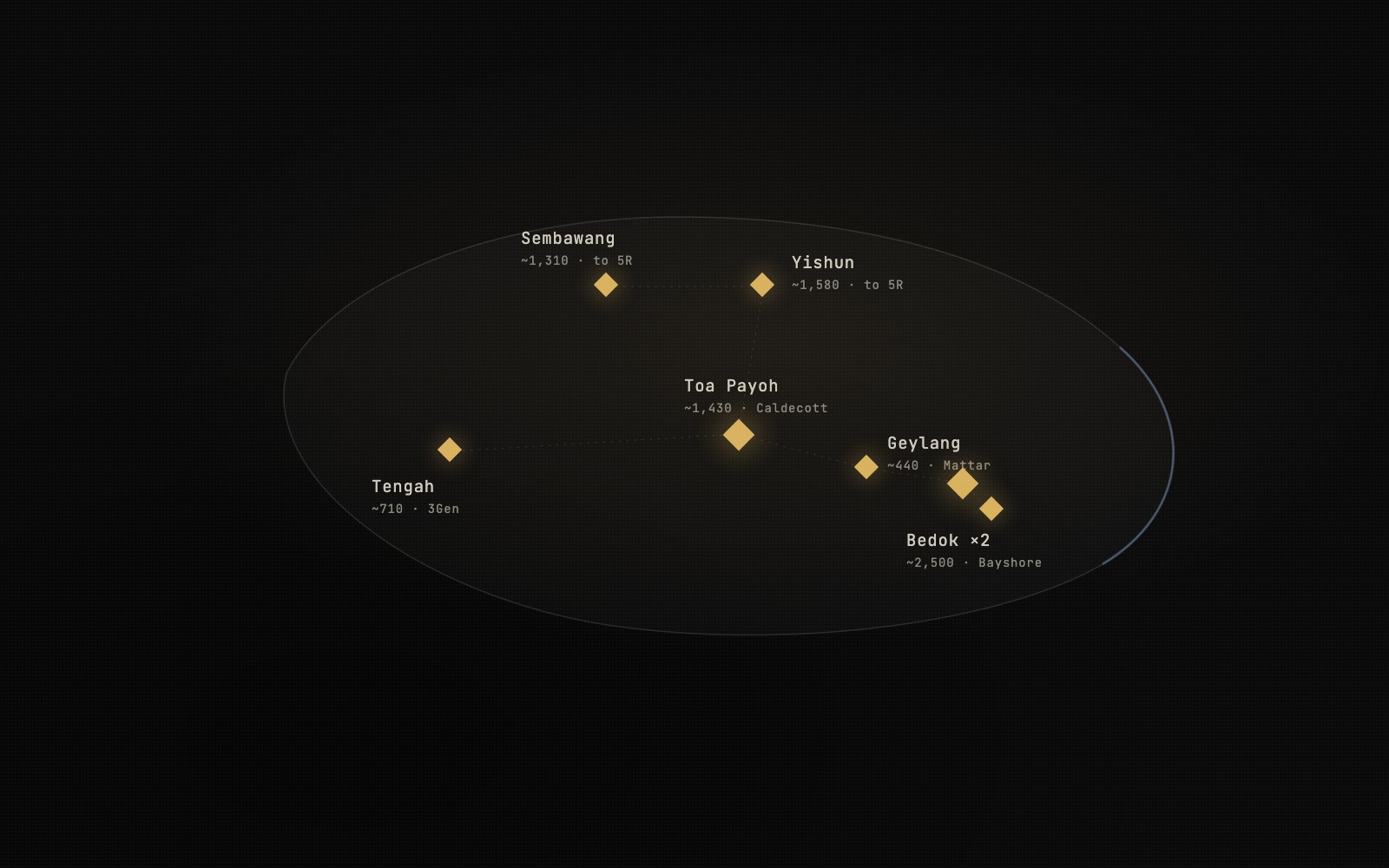
The November BTO, priced: 7,964 flats, seven projects, and one deadline left on 11 November.
HDB launched 7,964 flats on 4 November across three Standard, three Plus and one Prime project. Four-room flats start at $312,000 in Sembawang and $558,000 beside Caldecott MRT. Here is every price, the gap to resale in each estate, the clawback on the Plus and Prime flats, and which ballot is actually worth your one application before the window shuts at 11.59pm on 11 November.
Three quarters down, 0.6% in total. What HDB’s Q3 flash really says about resale prices.
HDB’s flash estimate puts the Q3 2026 Resale Price Index at 202.4, down 0.2% and the third straight quarterly dip, while URA’s private index jumped 1.4%. Volumes rose 17.7%, million-dollar flats hit 597, and the gap between an HDB flat and the condo it is meant to fund widened again. Here is what the number does and does not mean.
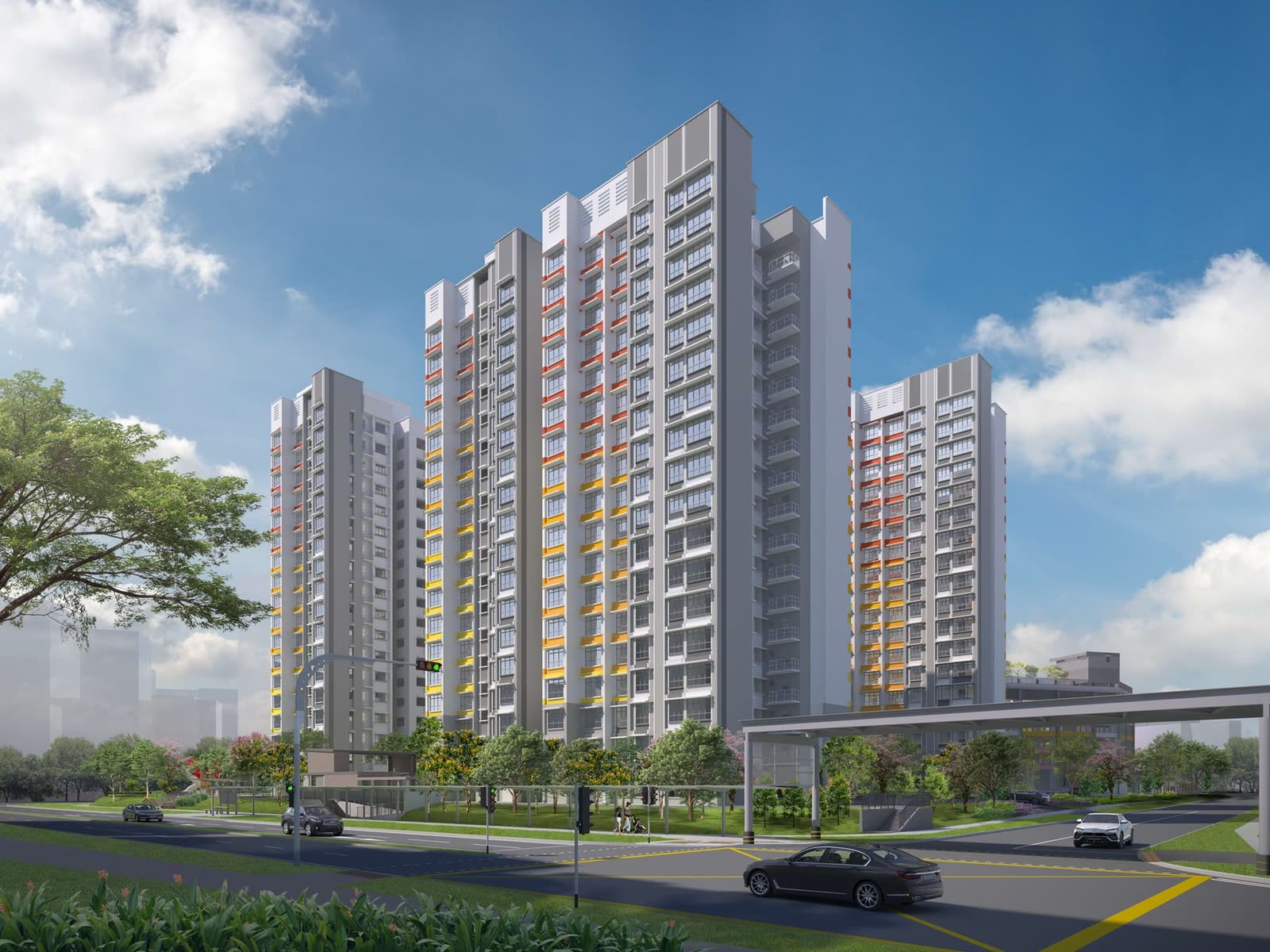
Our ranking is an opinion. The exit-demand scorecard is The Property Collective’s judgement as at 13 November 2026, scored on the tests described in the article. It is not a forecast of resale prices, a guarantee of any outcome, or advice to apply for or avoid any project; application rates measure demand for a new flat today, not the resale market of the 2030s and 2040s. Figures are HDB’s final counts from the Flat Portal as at 11.59pm on 11 November 2026 unless stated; the overall rates per project and per exercise are our division of applicants by flats; first-resale years are our arithmetic on HDB’s estimated waiting times plus the applicable minimum occupation period and are approximate. The Property Collective is a team within PropNex Realty Pte Ltd (CEA Licence L3008022J; James Lim, CEA Reg. R063631F) and is not affiliated with, endorsed by, or connected to HDB or any government agency. The header image is HDB’s artist’s impression of Toa Payoh Hillside, and the artist’s impressions in the article are HDB’s, reproduced with credit from the MyNiceHome November 2026 sales launch page; they show planned buildings, not completed ones. The floor plans are HDB’s layout ideas for each flat type, cropped from the Flat Portal sheets and reproduced with credit; they are not drawn to a common scale, and the furniture shown is HDB’s suggestion, not a fitting.