
A buyer upgrades to a condo, feels they’ve moved up well, then realises three years later that the next move is stuck — the bank won’t lend more, the place barely grew in value, or they can’t get their money back out cleanly. That’s exactly why planning the whole path matters. The real decision is rarely the unit on its own. It’s the order of your moves.
Buy homes one at a time and they tend to fight each other. Plan them as a sequence and each one keeps your options open. The difference shows up later — when you want to upgrade, free up cash, manage your loans, or decide whether to hold or sell. If you see your home as part roof over your head and part investment, planning is less about chasing the next launch and more about mapping a clean path across the years.
What “portfolio planning” actually means
At heart, it’s treating each property decision as part of a bigger money plan. The first question isn’t “what can I buy now?” It’s “what does buying this let me do — or stop me doing — five to ten years from now?”
That small shift changes almost everything. A home isn’t judged only on price, layout or address. It’s judged on how easy it is to finance, how likely it is to sell well, how risky it is to hold, how cleanly you can get out, and what next move it makes possible.
In Singapore this matters even more, because the rules shape the game: ABSD, loan limits, CPF, seller timelines, and a market split into very different segments. You’re not just choosing between projects — you’re playing inside a system that rewards planning and punishes winging it.
Start with where you stand, not with a property
The best decisions start with an honest look at your own numbers — before any talk of projects, districts or launch dates.
That means knowing your cash, your CPF, what you still owe, how much a bank will lend you, and the real usable equity in any home you own. And the softer stuff that still moves the outcome: how stable your job is, your family plans, your appetite for risk, and how long you intend to hold.
An HDB owner making a first move into private is in a different position from a condo owner sitting on big gains. A family with strong income but little spare cash faces different trade-offs from one with low debt and deep savings. Good advice starts by working out what kind of move your finances can actually support without strain.
Here’s where people make an expensive mistake: they aim for the biggest purchase price instead of the best fit. They’re not the same thing. Stretching to your absolute maximum can box you in later — especially if the place doesn’t grow much in value, or your next move needs cash you’ve already spent.
The order matters more than buyers think
A strong property plan is usually built by getting the order right, not by buying more. The sequence can matter as much as the homes themselves.
For some, the cleanest path is simple: build up equity in an efficient first private home, then upgrade once family needs and finances line up. For others, it might mean keeping one home and buying another — but only if the tax, the loans and your income can comfortably carry it. And sometimes the right move is no move at all: waiting twelve to eighteen months can give you a cleaner entry and a healthier loan picture.
So there’s no one-size upgrade script. The right order depends on when you enter, what you buy, how long you hold, and how good your exit options are. A buyer who picks a home with broad appeal at a sensible price keeps several future choices open. A buyer who overpays for a niche place with thin demand may own a lovely home but a narrower path. Property compounds — but so do mistakes.
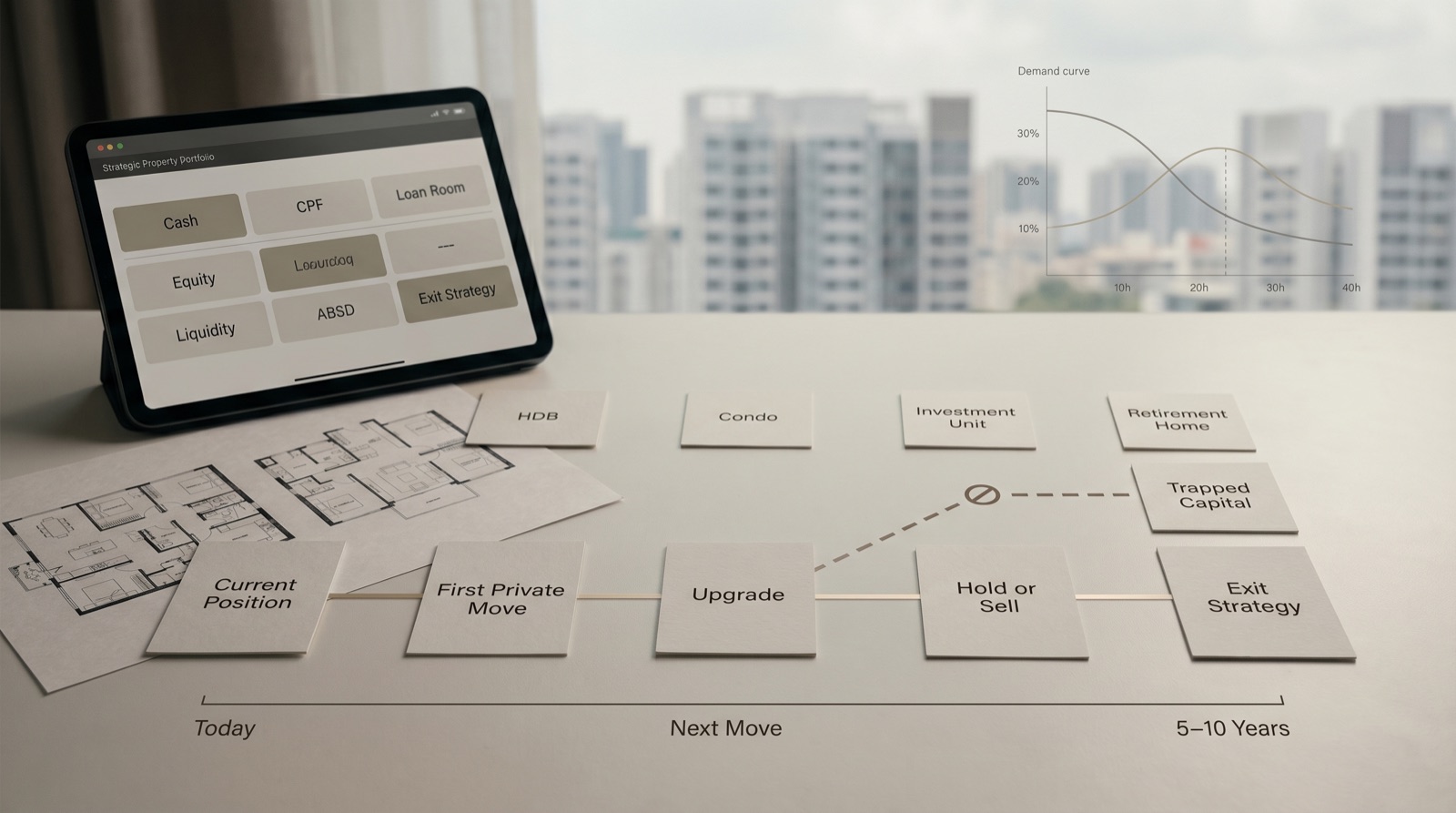
Choosing a home is really an early decision about selling it
One of the most useful ways to think about it: every purchase is also a future sale. If the eventual exit is weak, the whole plan weakens with it.
That doesn’t mean only buying what others want. It means understanding what creates lasting demand — the price tier, how efficient the unit is, the tenure, how much new supply is coming up nearby, schools and transport, the size of the project. Some homes are easier to own than to sell. Others don’t wow on launch weekend but hold up better because they suit a wide range of buyers.
This is where evidence beats the brochure. A polished showroom sells a dream; it can’t promise you’ll get your money back. You want to look at how similar units have actually traded, what’s being built nearby, and how the area behaves — not just how the place feels. The aim isn’t simply to buy a good home; it’s to buy a good piece of your plan.
At The Property Collective, this is central to how we plan. A home isn’t a one-off milestone — it’s one step in a longer path shaped by timing, financing and how well it sells later. It’s also why we check the home with BuySafe, our in-house tool, before you commit: it measures real, like-for-like price growth (with size and floor stripped out) across 140,000+ publicly available URA transactions and 3,000+ private condo projects, so you can see whether a place has genuinely held its value or just looks the part.
Loans, CPF and keeping cash free
Property wealth can look great on paper while leaving you stuck in practice. That usually happens when too much money is locked in, the loans are inflexible, or there’s too little cash spare.
Your loan should serve the plan, not bend it out of shape. A plan built on payments that are too tight can work fine until rates, income or family needs change — then it doesn’t. CPF deserves care too: using a lot of it helps at the start, but it comes back with accrued interest and trims the cash you walk away with at sale. Whether that trade is worth it depends on your goals.
Spare cash matters just as much. Pour every last dollar into the purchase and renovation, and you may own a smarter address but a weaker position — with little room to move when an opportunity shows up or the market turns. A great home held under pressure is still pressure.
Timing isn’t about predicting the market
People often ask if they should wait for a better market. The more useful question is whether the timing is right for them.
Calling the exact top or bottom is a fool’s game. Timing your own readiness is far more useful. If your current home is at a good point to sell, your income supports the next step, and there’s still fair value in what you want, the move can make sense even when the headlines sound mixed. But if your equity is thin, your loan room is stretched, or what you’d buy is poorly priced, waiting can be the smarter call.
A simple four-step framework
The cleanest way to plan a residential move is through four filters — and the one most people skip is to think about the exit before the entry.
Four filters for your next move
Get clear on your cash, CPF, loan room, gains and risk. Without that, every later decision is guesswork.
Is the next home mainly an upgrade, a way to protect your money, a growth play, or part of a bigger multi-property plan? One home can do more than one job, but one should lead.
Before you buy, ask who’ll want to buy it from you later, what new supply might compete, and whether the price still leaves room to sell well.
Make sure it still works under higher rates, slower growth and a longer hold. A plan that only works if everything goes right isn’t a plan — it’s a bet.
Why planning beats reacting
The market rewards owners who stay calm — especially when everyone around them is chasing launches, reacting to headlines, or buying for status instead of structure.
A reactive upgrade can still work; a rising market hides a lot of mistakes. But when the market settles, the gaps show. Entry price matters. Layout matters. Exit demand matters. Your loan setup matters. The owners who keep their options open are usually the ones who made calmer choices earlier.
That’s the value of planning. It doesn’t remove uncertainty — it puts boundaries around it. You know what you can afford, what to avoid, and what would make you act or wait.
The best property paths are rarely built on speed. They’re built on order, patience and good execution. Treat each purchase as part of a bigger map, and the next move gets clearer — and so does the one after that. A well-chosen home should do more than fit your life today; it should leave your future better funded, not more complicated.
Next: sell first, or buy first? →
Your next home should make the move after it easier, not harder. We map the whole path with you before you buy.
Keep reading
Related notes.
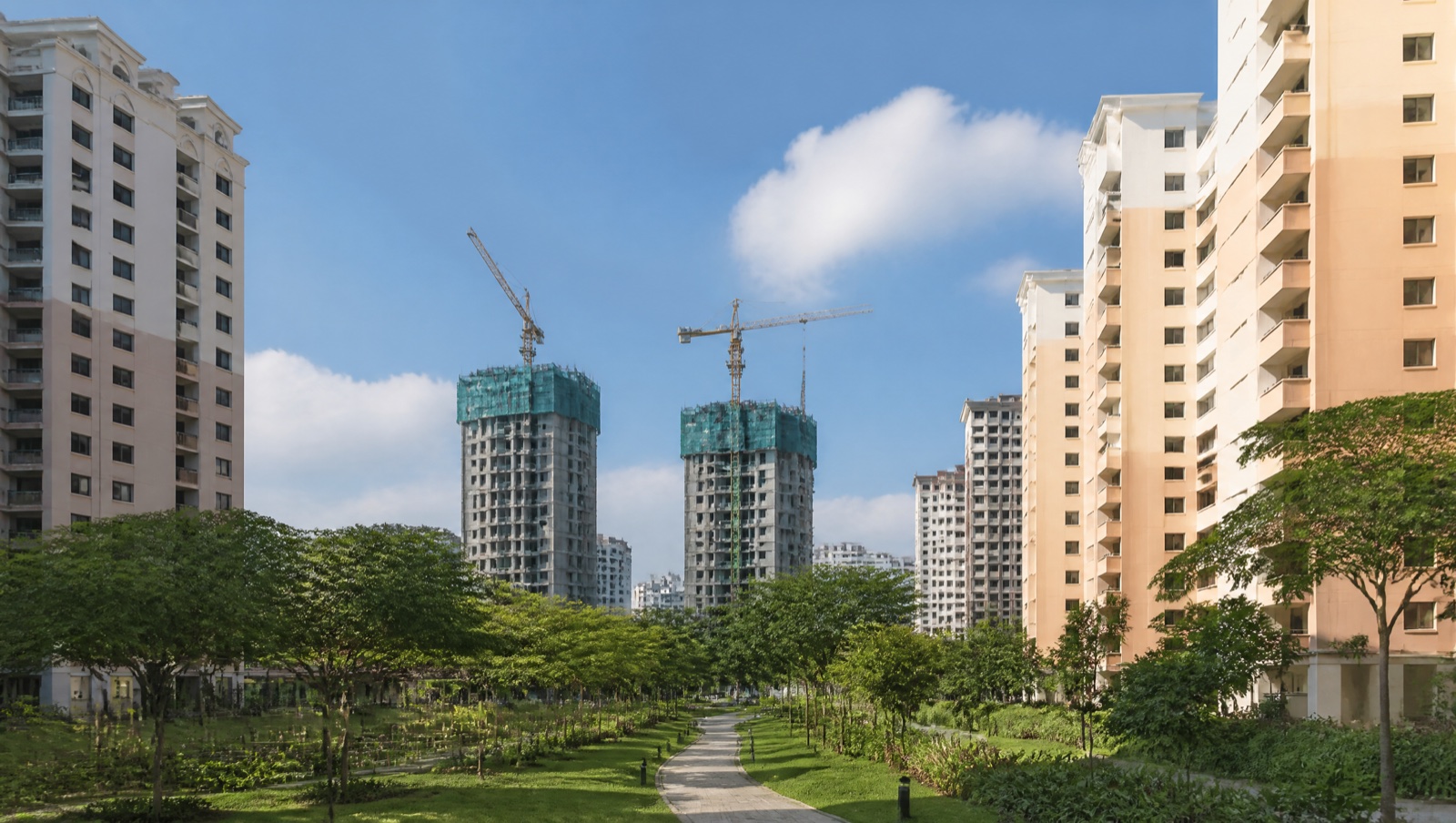
More flats are coming. What the 2026 to 2028 supply wave does to HDB resale prices.
HDB resale prices have fallen two quarters in a row, and the flats reaching their five-year MOP rise from about 13,500 this year to 19,500 in 2028. History says supply caps the upside but demand sets the direction. Here is where the softness lands first, and what it means if you are selling to upgrade.

Downgrading from a condo to HDB: what it actually unlocks, and what it costs.
Downgrading from a condo to HDB in Singapore no longer means a 15-month wait, and for most Singapore Citizens it now comes with zero ABSD. What eligibility actually requires, the CPF refund maths, and a worked example of what the move genuinely frees up.

Six quarters of muted growth: is this the upgrader’s window, or a trap?
Private prices have grown at 1% or less for six straight quarters, and HDB resale has now fallen two quarters in a row. That combination is unusual, and it changes the arithmetic of upgrading in a way most sellers have not noticed yet.
Not financial or tax advice. This is general commentary for informational purposes only. It is not financial, investment, tax, mortgage or legal advice, and not a recommendation to buy, sell or hold any property. Your position depends on your own circumstances.
Rules change. ABSD, TDSR, loan-to-value limits and CPF rules are set by IRAS, MAS, HDB and the CPF Board and can change without notice. Figures here are general guidance as at 2026 — confirm your exact position with the relevant authority, your banker and a conveyancing lawyer before committing.
Independent. The Property Collective is not affiliated with, endorsed by, or connected to IRAS, MAS, HDB, the CPF Board, the URA, or any government agency. BuySafe analysis uses historical, publicly available URA transaction data.