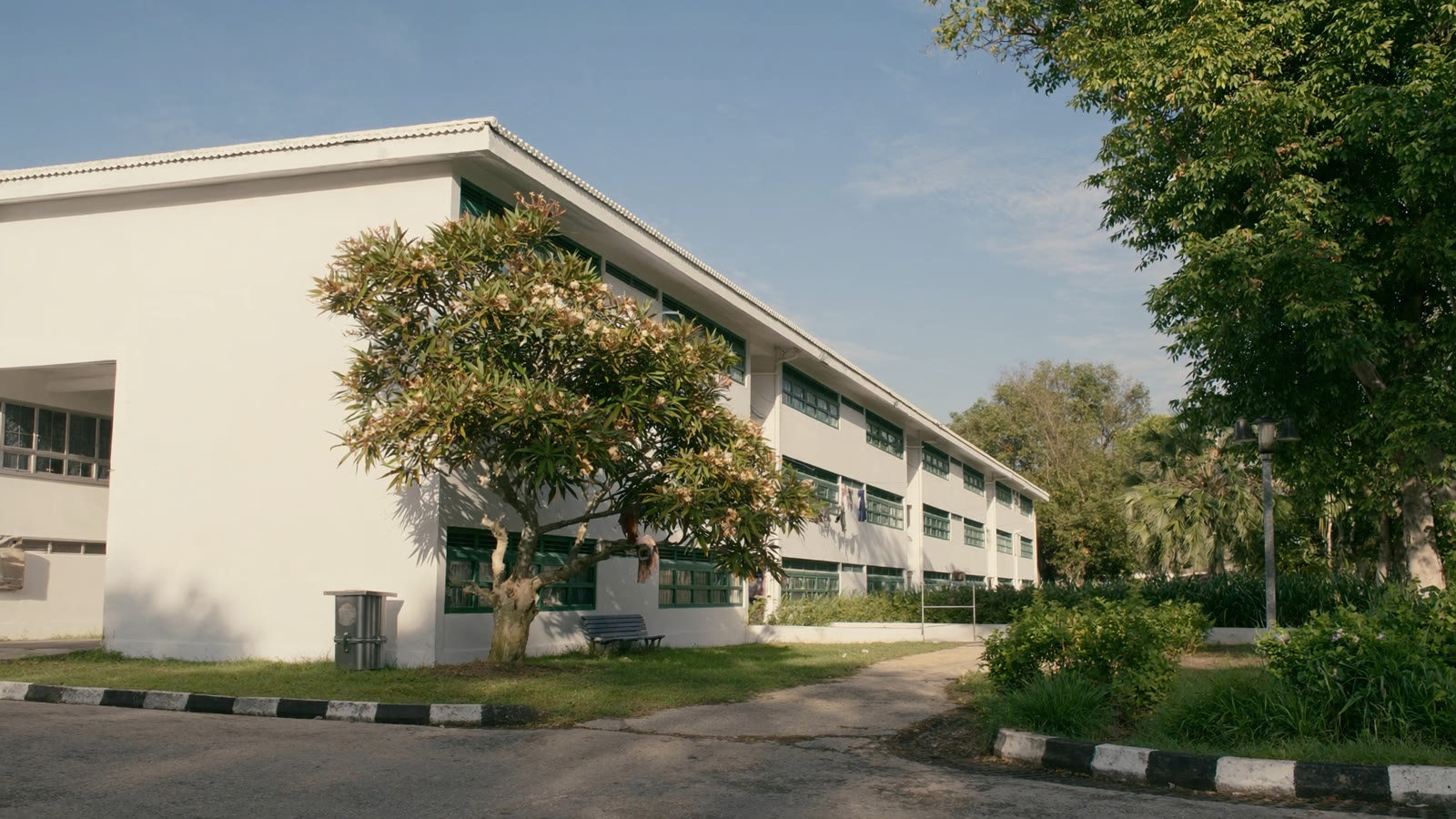
What to do if you have inherited a property in Singapore starts with the good news: there is no estate duty, no stamp duty on the inheritance itself, and the CPF savings the deceased used do not have to be refunded. What follows is less simple. An HDB flat comes with two clocks that start once probate is granted, a landed home cannot pass to a foreign heir without approval, and every inherited property, HDB or private, quietly joins your property count for Additional Buyer’s Stamp Duty on whatever you buy next. Here is the process, the eligibility rules, and what an inherited property actually costs you later, verified against IRAS, HDB, the Singapore Land Authority, the CPF Board and the Residential Property Act.
Sources: IRAS, HDB, Singapore Land Authority, CPF Board and the Residential Property Act, current as at 1 October 2026.
Do you owe any tax when you inherit a property in Singapore?
No. Singapore abolished estate duty for deaths on or after 15 February 2008, and a transfer of property to a beneficiary under a valid will, the Intestate Succession Act or Muslim inheritance law attracts no Buyer’s Stamp Duty, no Additional Buyer’s Stamp Duty and, since 19 February 2011, not even the old nominal duty.
That changes the moment money or value changes hands between beneficiaries. If you and a sibling jointly inherit a flat and you take over their share to become sole owner, the share you acquire is a purchase, not an inheritance. IRAS charges BSD on it, computed on the price paid or the market value of that share, whichever is higher, plus ABSD at whatever rate your property count puts you on. Because you already held an interest in the same property, partial ABSD remission may be available, but it has to be applied for. The inheritance itself is free. Buying anyone out of it afterwards is not.
What is the actual process, from death to transfer?
An executor or administrator must first obtain a Grant of Probate or Letters of Administration from the Family Justice Courts before any property can be dealt with, a step that commonly takes several months.
With a will, the named executor applies for a Grant of Probate. Without one, a next-of-kin applies for Letters of Administration and the estate is distributed by the fixed formula in the Intestate Succession Act rather than by choice. Only once the grant is issued can the property be transmitted to the executor or administrator and then transferred to the beneficiaries, and only then does it formally become theirs to keep, rent or sell. Budget for this stage to take anywhere from a few months to over a year, depending on how straightforward the estate is and whether anyone contests it.
One exception short-circuits all of this. If the deceased held the property as a joint tenant, their share passes automatically to the surviving joint owner, who simply lodges a Notice of Death with the Singapore Land Authority. Probate is only needed for property held in the deceased’s sole name or as tenants-in-common.
What are the HDB deadlines after a flat owner dies?
Two, and neither starts at the date of death. The executor or administrator must apply to HDB for transmission of the flat within 6 months of obtaining the Grant of Probate or Letters of Administration, and then has 12 months after transmission is completed to either change the ownership to eligible beneficiaries or sell the flat.
Source: HDB, Retain Flat Following Life Events, demise of a sole owner or tenant-in-common.
| Step | Deadline | What it involves |
|---|---|---|
| Grant of Probate or Letters of Administration | No fixed deadline | The court order that lets the executor or administrator deal with the estate. Commonly several months. |
| Apply for transmission of the flat | 6 months after the grant | Registers the executor or administrator’s legal right to the flat, through HDB’s legal services or your own lawyer. |
| Change ownership or sell | 12 months after transmission | Transfer the flat to eligible beneficiaries, by resale part-share or a change of ownership without a sale, or sell it on the open market. |
The flat must have met its Minimum Occupation Period as at the date of death before it can be sold on the open market. Studio Apartments, short-lease 2-room Flexi flats, Community Care Apartments and flats under the Lease Buyback Scheme cannot be sold at all and are returned to HDB.
Can you keep an inherited HDB flat if you already own a home?
Only if you clear HDB’s eligibility conditions for taking over a flat without a sale, and those conditions do not allow anyone to own two HDB flats at once.
The practical deadline for all of this is the 12 months HDB gives after transmission, which only begins once probate is done, so the family usually has well over a year from the date of death to decide. If keeping the family flat means letting go of your own, right-sizing into it deliberately is worth planning properly rather than treating the HDB window as the only decision driver. One consolation: where HDB’s rules force you to dispose of either the inherited flat or your existing one, IRAS exempts that disposal from Seller’s Stamp Duty.
What if the inherited property is private, not HDB?
A condo or apartment carries no retention test at all, but a landed home cannot pass to a foreign heir, PRs included, unless the Singapore Land Authority approves.
Condominium and flat units sit outside the Residential Property Act’s restrictions, so any citizen, PR or foreigner can inherit and hold one with nothing to apply for. Landed property, which covers terrace, semi-detached and detached houses, vacant residential land and strata landed houses outside approved condominium developments, is different. Under section 3(3) of the Act, no interest in restricted residential property passes by inheritance to a foreign person at all, and a PR is a foreign person for this purpose. A non-citizen heir who wants to keep the house needs approval from the Land Dealings Approval Unit; a PR generally has to show at least five years of permanent residency and an exceptional economic contribution to Singapore. If approval is not granted, section 3(4) obliges the executor or administrator to sell that heir’s share to a citizen or approved purchaser within 5 years of the date of death, or within any extension the Controller allows, and pay the proceeds to the heir. If it is still unsold after that, the Minister can direct the Controller to attach and sell the property.
Does inheriting a property affect CPF?
No. The CPF Board confirms that the CPF savings a deceased owner used for the property do not have to be refunded to their CPF account, neither when you inherit it nor when it is later sold.
This is one of the most repeated myths about inherited property. When a living owner sells, the CPF principal used plus accrued interest goes back into their Ordinary Account. When an owner dies, that obligation dies with them: the property forms part of the estate if it was held in the deceased’s sole name or as tenants-in-common, or passes to the surviving joint owner if it was held in joint tenancy, and no CPF refund comes off the eventual sale proceeds. What does carry on is any outstanding mortgage, which the estate still has to settle, and, where a surviving co-owner used their own CPF, that co-owner’s own refund obligation when they eventually sell.
Does an inherited property affect your ABSD on your next purchase?
Yes. An inherited residential property in Singapore joins your property count for Additional Buyer’s Stamp Duty purposes, even though you paid no stamp duty at all to receive it.
IRAS counts any residential property you acquire by inheritance, gift, or several other non-purchase routes toward the same property count used to set your ABSD rate on your next purchase. For a Singapore Citizen, that rate steps from 20% on a second property to 30% on a third, the same schedule that applies to any additional purchase. One inherited flat can be the difference between those two tiers on a purchase that has nothing to do with the inheritance at all.
Hypothetical Singapore Citizen buyer, existing condo already owned, buying a further $1.8m property. ABSD rates unchanged since 27 April 2023.
| Scenario | Property count entering the purchase | ABSD tier | ABSD owed |
|---|---|---|---|
| No inheritance | 1 (existing condo) | 2nd property: 20% | $360,000 |
| After inheriting a parent’s HDB flat | 2 (existing condo + inherited flat) | 3rd property: 30% | $540,000 |
The inherited flat itself attracted $0 in stamp duty. It is the property count, not the inheritance, that adds $180,000 to the very next, unrelated purchase.
Do you pay Seller’s Stamp Duty if you sell an inherited property quickly?
Almost never. For SSD, IRAS treats your date of acquisition of an inherited property as the date the deceased acquired it, so a home the deceased had held for more than 4 years is already outside the SSD window on the day it becomes yours.
IRAS’s own worked example makes the point: a property the father bought in September 1999, inherited in June 2018 and sold in October 2018 attracts no SSD at all. The current schedule, for residential property acquired on or after 4 July 2025, runs from 16% in the first year down to 4% in the fourth and nothing after that, but it is the deceased’s purchase date that sets the clock, not the transfer to you. And where HDB’s rules force a beneficiary to dispose of an inherited flat or their existing flat, IRAS exempts that disposal from SSD outright, for disposals on or after 18 December 2015.
What happens when several siblings inherit the same property together?
Co-heirs typically hold the property as tenants-in-common in defined shares, and any sale, or one sibling buying out the others, needs the agreement of everyone named on the title.
No single co-owner can force a private sale on the others without going through the courts, which is slow and adversarial. In practice, most families either sell to a third party and split the proceeds by share, the cleanest outcome, or one sibling buys out the rest, which requires that sibling to pay BSD, and ABSD if it pushes their own property count up, on the price paid or market value of the shares acquired, whichever is higher. Agreeing this early, in writing, before emotions or separate agents get involved, avoids the slow and expensive route of a forced sale application.
Who should care, and what to do next
Next: how to sell your condo in Singapore, step by step →
Sources
- IRAS: Is Additional Buyer’s Stamp Duty (ABSD) payable on an inherited property?
- IRAS: Is an inherited property included in my property count for ABSD purposes?
- IRAS: Buying over a sibling’s share of an inherited property, ABSD and BSD
- IRAS: Fixed and Nominal Duties (transfers by assent no longer dutiable)
- IRAS: Seller’s Stamp Duty (SSD) for Residential Property
- IRAS: Additional Buyer’s Stamp Duty (ABSD)
- IRAS: Estate Duty
- CPF Board: What happens to a deceased member’s property bought using CPF savings
- CPF Board: Must the CPF housing refund be repaid to the late owner’s account when the property is sold?
- HDB: Retain Flat Following Life Events (demise of an owner, transmission and the 12-month window)
- HDB: Eligibility for Change in Flat Ownership (not through a sale)
- Singapore Land Authority: Foreign ownership of property (Residential Property Act, LDAU approval)
- Residential Property Act 1976, section 3 (inheritance by foreign persons, 5-year sale deadline)
Sorting out an inherited flat or condo, alongside your own property plans? We map the eligibility rules, the ABSD exposure on what you buy next, and whether keeping, renting or selling the inherited unit actually serves the family best.
Keep reading
Related notes.
Divorce and your property in Singapore: what actually happens to the flat, the CPF, and the next purchase.
A divorce court order can move the matrimonial home to one spouse without any stamp duty. But the CPF refund is a default the Court can vary, a subsidised flat still carries a resale levy, and a replacement home bought before the old one is sold can trigger ABSD anyway. Here is how property, CPF and tax actually work through a Singapore divorce.
Mortgagee sales just hit a five-year high. Here is what actually happens if you can’t pay your mortgage.
What happens if you can’t pay your mortgage in Singapore: 216 mortgagee sale listings hit the market in 1H 2026, a five-year high. The real sequence is slower and more negotiable than the auction headlines suggest, for both HDB and bank loans, if you act while the loan is still current.

Most sellers make money. The ones who lose all bought the same way.
In Q2 2026, 4.7% of private resales closed at a loss, the highest share in four years, in a quarter when prices rose. From the $6.6 million Seascape mortgagee sale to five units in one Scotts Road tower, the losses repeat the same anatomy. Here is the pattern, and the five checks that catch it before you sign.
Figures are indicative. The $1.8m purchase price and existing-condo ownership in the worked ABSD example are round, hypothetical figures chosen to show the mechanics, not a specific transaction. Probate timelines, HDB eligibility outcomes and Land Dealings Approval Unit decisions depend on individual circumstances and the courts’ and agencies’ own processing times. Rules are as published by IRAS, HDB, SLA and the CPF Board as at 1 October 2026. Confirm your own position with the agencies and a probate lawyer before acting.
Not financial advice. This is general information and market commentary, not financial, legal or tax advice, and not a recommendation on any specific estate, property or purchase. Inheritance, probate and property eligibility depend heavily on individual circumstances; consult a lawyer for estate and probate matters.
Independent. The Property Collective is a team within PropNex Realty and is not affiliated with, endorsed by, or connected to IRAS, HDB, the Singapore Land Authority, the CPF Board, the courts of Singapore, or any government agency.