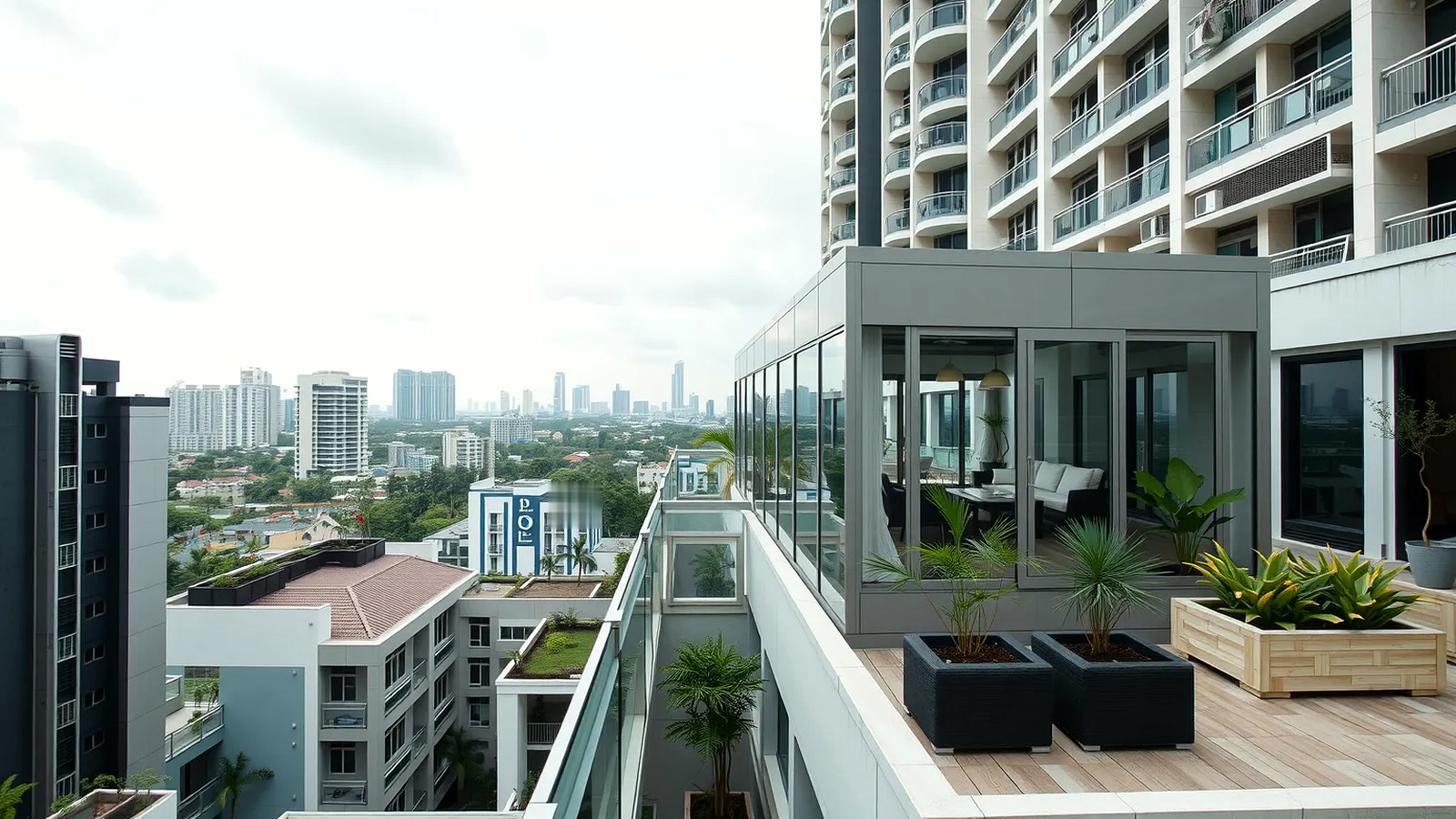
On 11 October 2026 the Urban Redevelopment Authority said it has been receiving reports of suspected unauthorised works in strata-titled homes at a steady clip: 147 in 2024, 148 in 2025 and 116 in the first nine months of this year, with about 90% of them confirmed on inspection. The examples it gave are the ones every resale buyer has walked past at a viewing: a loft or mezzanine larger than 5 square metres, or an enclosed structure on a private roof terrace or a first-storey patio. Two things in the statement matter more than the numbers. The responsibility to remove or regularise the works sits with the owner on title, including where the works were already in place when they purchased the property. And the penalties are not small: up to $200,000 under the Planning Act, and up to $200,000 or two years’ jail under the Building Control Act, plus daily fines while the breach continues. This is a buyer’s guide to not inheriting that problem, and an owner’s guide to dealing with one.
Sources: URA statement of 11 Oct 2026, as reported by The Straits Times; Building Control Act 1989, section 20; URA and BCA legal requisition pages.
What did URA say on 11 October 2026?
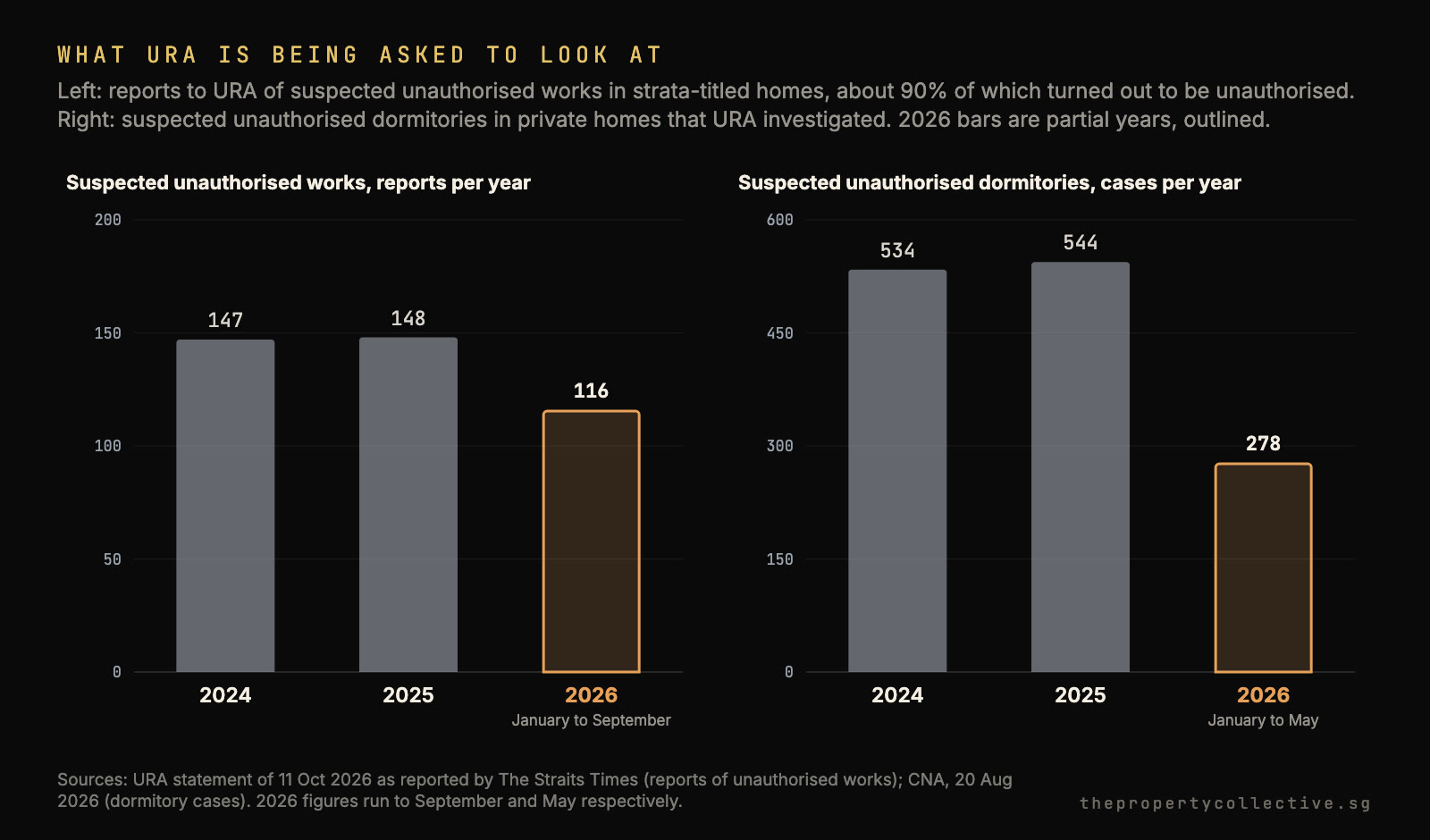
URA said reports of suspected unauthorised works in strata-titled homes came to 147 in 2024, 148 in 2025 and 116 in the first nine months of 2026, and that about 90% were confirmed. That is a persistent problem rather than a new one, and it puts this year on course for about 155 reports. They typically arrive from neighbours in the same estate or from its management corporation, and from the periodic structural inspections that residential buildings must undergo every 10 years. URA said enforcement action has been initiated in “a number of cases”, that most unauthorised works are removed after an enforcement notice without going to court, and that it “will not hesitate to prosecute offenders in court if they do not comply with the enforcement notices”. The Building and Construction Authority added that it investigated an average of about 50 reported cases of unauthorised structures in strata developments a year over the past three years, most of them assessed as structurally safe.
URA’s instruction to owners was direct: remove the structures, or obtain the approvals needed to keep them where the law allows it. Its reasons were structural and financial: a mezzanine loads slabs, beams and columns that were not designed for it, and maintenance fees and sinking fund contributions follow share value, which follows approved floor area, so an owner with an unapproved loft enjoys extra space without paying the corresponding share of fees. “It is the responsibility of property owners to take steps to rectify or regularise unauthorised works, including in cases where the works were already in place when they purchased the property,” it said, adding that failure to do so may bring further enforcement. The agencies will also engage MCSTs and managing agents so that owners are told the requirements before they build. The statement sits alongside a related trend: URA investigated 534 suspected unauthorised dormitories in private homes in 2024, 544 in 2025 and 278 in the first five months of 2026, cases where units are partitioned into extra rooms and over-occupied.
What counts as unauthorised works in a condo?
Unauthorised works are any renovation carried out without the approval it needed: planning permission from URA where floor area is added, approved plans and a permit from BCA where structure is touched, or the management corporation’s consent where the facade or common property is affected. Three sets of rules apply to the same unit, and a renovation can be legal under one and illegal under another. URA decides whether works need planning permission, and the test is gross floor area: anything that adds floor area, or changes a unit so that it no longer functions as a single self-sufficient home, needs permission. BCA decides whether works need approved building plans and a permit, and the test is structure: load-bearing walls, slabs, and anything heavier than the insignificant works listed in the Building Control Regulations. The management corporation decides whether works may change the appearance of the building or touch common property, under the Building Maintenance and Strata Management Act and the estate’s by-laws. The table sets out where the common renovations fall.
Sources: URA, Renovating Private Residential Property, Strata-titled Residential (updated 12 Jun 2026); URA Flats and Condominiums Handbook; Building Control Regulations 2003, First Schedule; BCA, What to know as a condo owner.
| Works | URA planning permission | BCA plans and permit | MCST |
|---|---|---|---|
| Loft used as a furniture deck, up to 5 sq m, one per unit | Not required | Not required if it has timber flooring only and is within 5 sq m | By-laws may still require consent |
| Loft or mezzanine above 5 sq m | Required; it adds GFA, and the MC must authorise it by a 90% resolution | Required; a qualified person submits structural plans | Written approval needed |
| Open-sided cover over a balcony, PES or roof terrace | Not required | Only where BCA or SCDF requirements are triggered | MCST consent is a condition of the exemption |
| Enclosing a balcony with walls or glass panels | Not allowed; balconies must stay semi-outdoor. Blinds are treated as furnishing | Depends on the structure | Usually refused; see the Sea Esta case below |
| Enclosed room on a private roof terrace or first-storey patio | Required, and contrary to URA’s handbook: an enclosed room adds GFA, roof-terrace structures must stay open-sided and a PES must keep its semi-outdoor character | Required | Written approval and a 90% resolution for the GFA |
| Moving or adding internal partitions | Exempt, unless the result is a sub-unit rather than one self-sufficient home | Non-load-bearing walls are insignificant works | Check the by-laws |
| Hacking a load-bearing wall or altering a slab | Not usually a planning matter | Required; plan approval and a permit before work starts | Written approval |
| Partitioning for extra tenants | Not exempt where it creates sub-units; the occupancy cap is six unrelated persons for units under 90 sq m, and eight for larger units until 31 December 2028 | Depends on the works | By-laws on use and nuisance apply |
GFA means gross floor area. A 90% resolution is the vote the management corporation needs under the BMSMA before it can authorise a subsidiary proprietor to add floor area to a lot.
The loft is the one that catches people. URA allows one loft per unit without planning permission if it is designed as a furniture deck and does not exceed 5 sq m. BCA treats a loft with timber flooring of up to 5 sq m as insignificant building work that needs no plan submission. Go past 5 sq m, or add a second one, and both regimes switch on at once: the extra area is GFA that needs planning permission, the estate must pass a 90% resolution to authorise it, and a qualified person must submit structural plans to BCA. Build it in steel or concrete and BCA’s exemption falls away even under 5 sq m, because the exemption is for timber flooring only. Most of the “bonus room” lofts in resale listings fail at least one of those tests.
What are the penalties, and who pays if the works came with the unit?
Up to $200,000 under the Planning Act, and up to $200,000 or two years’ jail under the Building Control Act with daily fines while the breach continues, and the owner on title pays, whether or not they built it. The table sets out each regime’s exposure.
Sources: Building Control Act 1989, sections 20 and 21; The Straits Times on the Planning Act penalty, 11 Oct 2026; MCST Plan No 4348 v Taylor and others [2026] SGDC 285.
| Regime | Exposure |
|---|---|
| Planning Act, development without permission | A fine of up to $200,000, as reported from URA’s statement |
| Building Control Act s.20(1), works without approved plans or a permit | Up to $200,000, or 2 years’ jail, or both; up to $1,000 a day while it continues, and $2,000 a day after conviction |
| Building Control Act s.20(2), breaching a condition of an approval or permit | Up to $20,000, or 12 months’ jail, or both, plus the same daily fines |
| Building Control Act s.21, pecuniary penalty | BCA can demand up to 10 times the plan-approval fees that should have been paid, with or without a prosecution; paying it regularises the works |
| Management corporation | Strata Titles Board orders, then court orders and injunctions; the owner carries the costs, as the Sea Esta owners did |
| Removal and reinstatement | At the owner’s own expense, including where the works were there at purchase |
The line that should change how you read a listing is URA’s: the obligation runs with the unit, not with whoever built the thing. A buyer who completes on a unit with an unauthorised mezzanine becomes the person BCA and URA write to. There is no defence that the previous owner did it, and the seller is usually gone. The only protection is to find it before you exercise the option, and to make the seller fix it or price it.
What does an MCST dispute actually look like? The Sea Esta case
A District Court judgment released on 10 September 2026 shows how long and expensive one balcony can become: almost five years of non-compliance, two court orders and an $8,000 costs order for the final application alone. The owners of a unit at Sea Esta installed a solid glass curtain on their balcony. The management corporation took them to the Strata Titles Board, which produced a consent order on 6 September 2021: remove the glass curtain within six months, restore the balcony to its original design, and install Ziptrak blinds instead, subject to a renovation application the MCST would answer within two weeks. The owners’ applications were rejected as incomplete, the deadline passed, the MCST registered the order as a District Court judgment in 2023, and when its contractors tried to enter in December 2024 they were refused.
District Judge Jonathan Ng Pang Ern held that the glass curtain was unauthorised for the purposes of section 37(3) of the Building Maintenance and Strata Management Act, granted injunctions stopping the owners and the unit’s occupier from obstructing the MCST’s entry and rectification works under its statutory powers, and ordered the respondents to pay $8,000 in costs for this application, plus GST. He described non-compliance of “almost five years” and “a breathtaking disregard” for the Board’s and the court’s orders. The lesson is procedural as much as legal: once the MCST has an order, the owner pays for the removal, the MCST’s costs and their own lawyers, and still loses the glass.
How do you check a unit before you buy?
Ask the MCST for the unit’s renovation approvals, have your lawyer run URA’s $54.50 and BCA’s $37 legal requisitions before the option is exercised, and compare the unit with its approved plans. Here are the five checks in the order they cost you.
What should an owner do about works already in place?
Regularise the works where URA and BCA can approve them, and remove and reinstate where they cannot, before an enforcement notice arrives. URA has said the duty sits with the owner on title even where the works came with the unit, so waiting for the next owner is not an option.
What does it do to value and resale?
Our read: unauthorised floor area is worth nothing to a bank and less than nothing to a careful buyer. Valuers work from approved floor area, so a 15 sq m mezzanine adds no lendable value; a buyer who understands the exposure will deduct the cost of removal and a margin for the risk, and a buyer who does not understand it is the one you do not want to depend on. Enclosed balconies and terrace rooms are the clearest case, because URA’s guidelines say balconies cannot be enclosed and roof-terrace structures must stay open-sided, so there is no regularisation to price in. If you are working out what your condo is worth, value the plan, not the improvements. And if you are choosing between a new launch and a resale unit, this is one of the quiet arguments for new: a developer’s unit matches its approved plan on the day you get the keys, which is not the only difference, but it is a real one.
Next: how to sell your condo in Singapore, including what to fix before you list →
Sources
- The Straits Times: URA flags “persistent trend” of suspected cases of unauthorised works in residential units (11 Oct 2026)
- URA: Renovating Private Residential Property, Strata-titled Residential (updated 12 Jun 2026)
- URA: Exemptions from planning permission
- URA: Flats and Condominiums Handbook, Balconies, Private Enclosed Spaces, Private Roof Terraces and Indoor Recreation Spaces
- URA: Legal Requisition
- URA: Buy Planning Records
- URA: Renting Property, occupancy cap and minimum stay
- Singapore Statutes Online: Building Control Act 1989, Part 5, sections 20 and 21
- Singapore Statutes Online: Building Control Regulations 2003, First Schedule, insignificant building works
- BCA: Periodic Structural Inspection (updated 15 Jul 2026)
- BCA: Legal Requisition
- BCA: Building works not requiring approval
- BCA: What to know as a condo owner
- BCA: Plan Purchase application
- State Courts: Management Corporation Strata Title Plan No 4348 v Daniel Leigh Taylor and others [2026] SGDC 285
- CNA: Overcrowded units, short stays: suspected illegal accommodation cases on the rise in Singapore (20 Aug 2026)
Buying a resale condo with a loft, an enclosed terrace or a reworked layout? We check the approved plans, the requisitions and the MCST record before you exercise the option.
Keep reading
Related notes.
Inherited a property in Singapore? Here is the process, the tax you don’t owe, and the one you quietly do.
What to do if you inherit a property in Singapore: no estate duty, no stamp duty on the inheritance itself and no CPF refund on the deceased’s savings, but HDB runs a 6-month and a 12-month clock after probate, a landed home cannot pass to a foreign heir without approval, and the property joins your ABSD count on whatever you buy next.
Divorce and your property in Singapore: what actually happens to the flat, the CPF, and the next purchase.
A divorce court order can move the matrimonial home to one spouse without any stamp duty. But the CPF refund is a default the Court can vary, a subsidised flat still carries a resale levy, and a replacement home bought before the old one is sold can trigger ABSD anyway. Here is how property, CPF and tax actually work through a Singapore divorce.
Mortgagee sales just hit a five-year high. Here is what actually happens if you can’t pay your mortgage.
What happens if you can’t pay your mortgage in Singapore: 216 mortgagee sale listings hit the market in 1H 2026, a five-year high. The real sequence is slower and more negotiable than the auction headlines suggest, for both HDB and bank loans, if you act while the loan is still current.
Not legal advice. This article summarises public guidance and legislation as at 11 October 2026 for general information. Whether specific works need approval depends on the unit, the estate’s by-laws and the agencies’ assessment; engage a conveyancing lawyer and, where structure is involved, a qualified person or professional engineer before you buy, build or regularise.
Figures. Report counts and the 90% confirmation rate are URA’s, as reported by The Straits Times on 11 October 2026; the dormitory case counts are URA’s as reported by CNA on 20 August 2026. Penalty amounts are from the Building Control Act as published on Singapore Statutes Online; the Planning Act figure is as reported from URA’s statement. Requisition fees and planning-record fees are those published by URA and BCA at the time of writing.
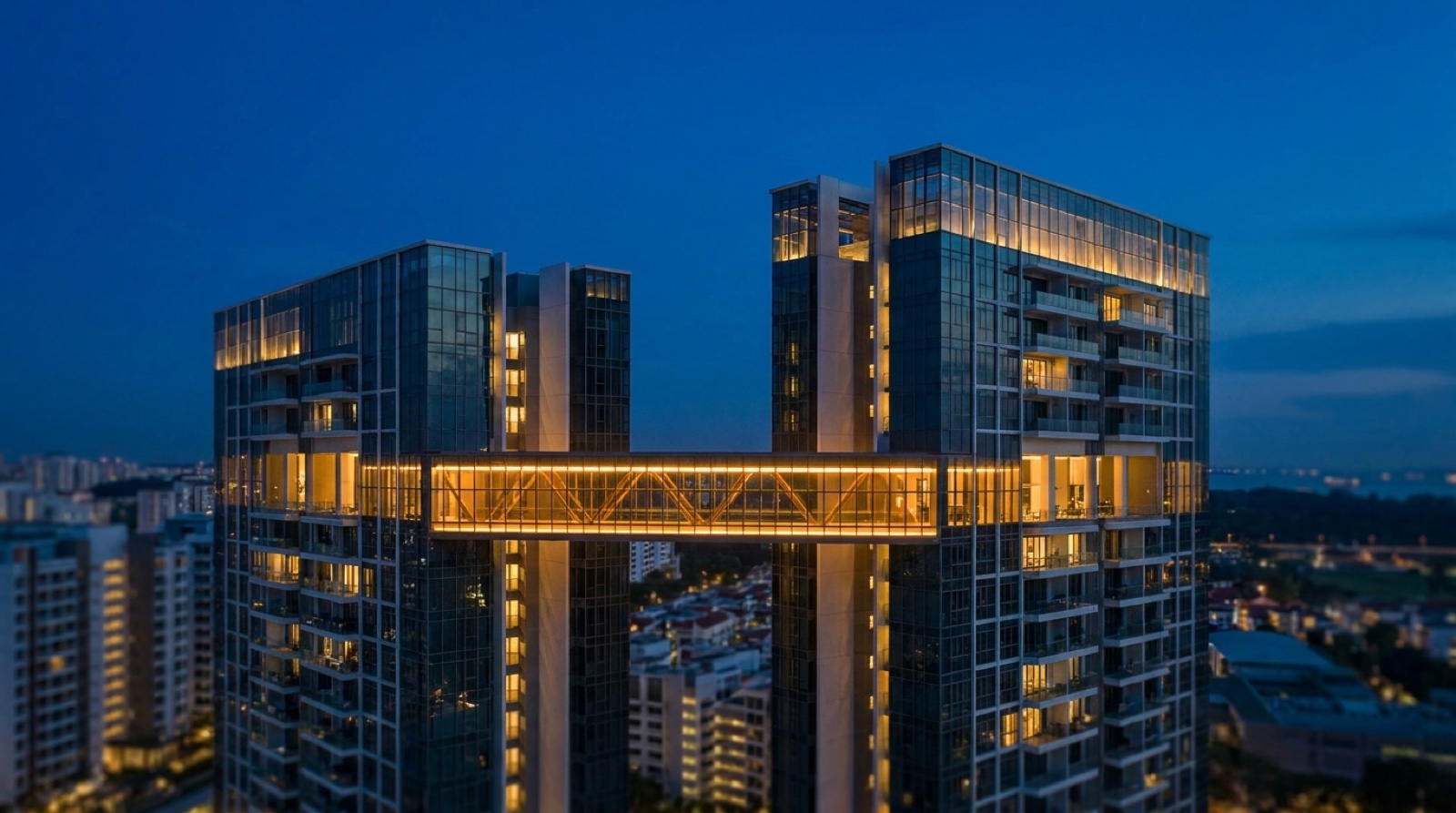
Illustration. The header image is an AI-generated illustration of an enclosed structure on a condominium roof terrace, not a photograph of any estate or case named here.
Independent. The Property Collective is a team within PropNex Realty. We are not affiliated with URA, BCA or any party to the case described.